
Use this simple three-part routine to help children pause, explain what happened, and choose a repair they can actually do.
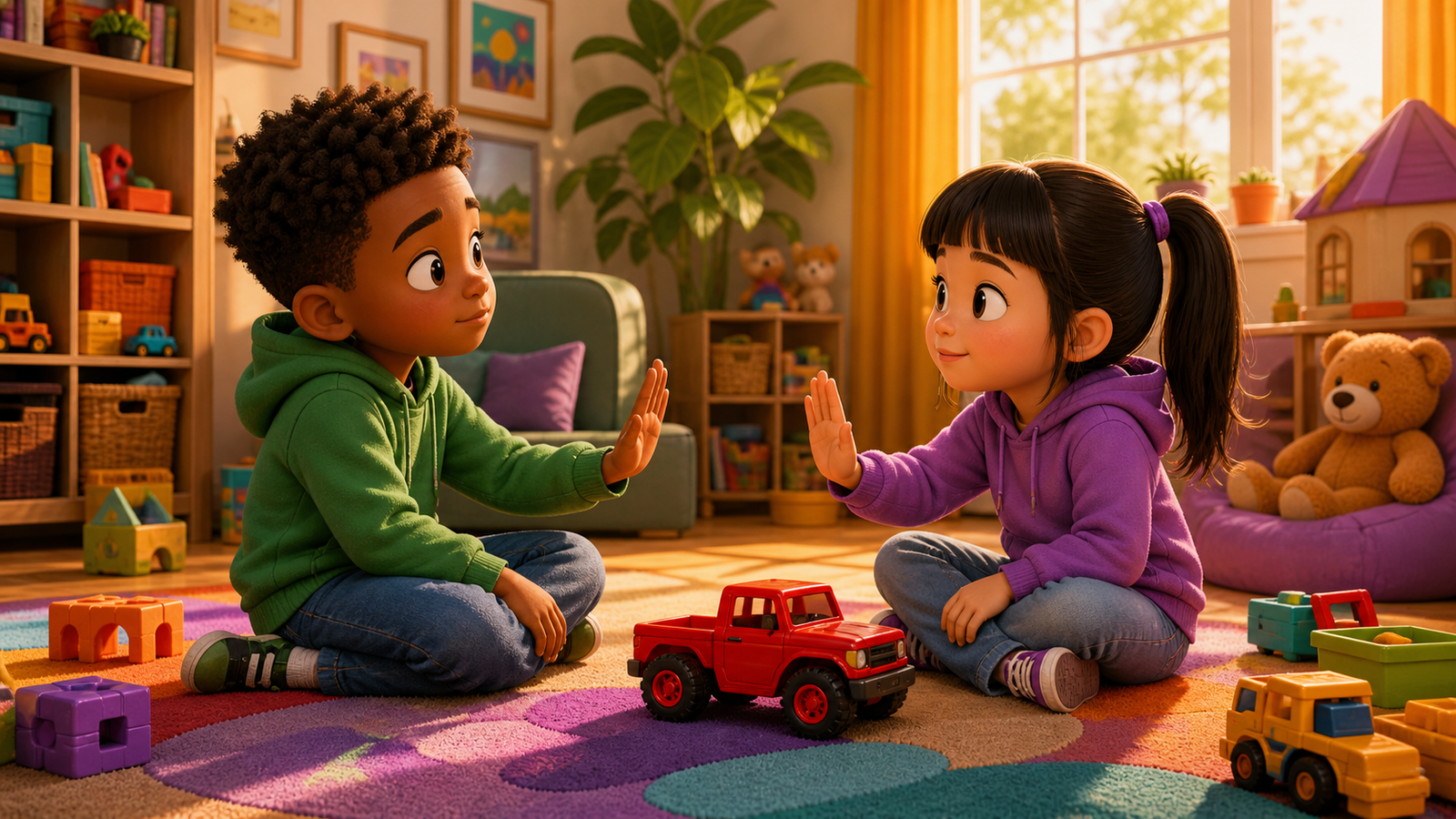
Small conflicts are part of learning how to be a friend. A child grabs a marker, changes the rules, bumps a block tower, or says something that hurts. In a tense moment, a long lecture is hard to follow. Children ages 5–8 usually need a short routine they can remember.
The Stop-and-Repair routine has three parts: stop and settle, say what happened, and choose a repair. An adult can guide the words at first. With practice, children can begin using the steps on their own.
1. Stop and help bodies settle
First, make the situation safe. Use a calm direction such as, “Hands down. Take one step back.” If a toy is being pulled, place it nearby until both children are ready. Do not ask for the full story while voices are still rising.
A short pause might mean one slow breath, a drink of water, or sitting close to a trusted adult. The goal is not to punish either child. It is to help both brains become ready to listen and solve the problem.
2. Say what happened without blame
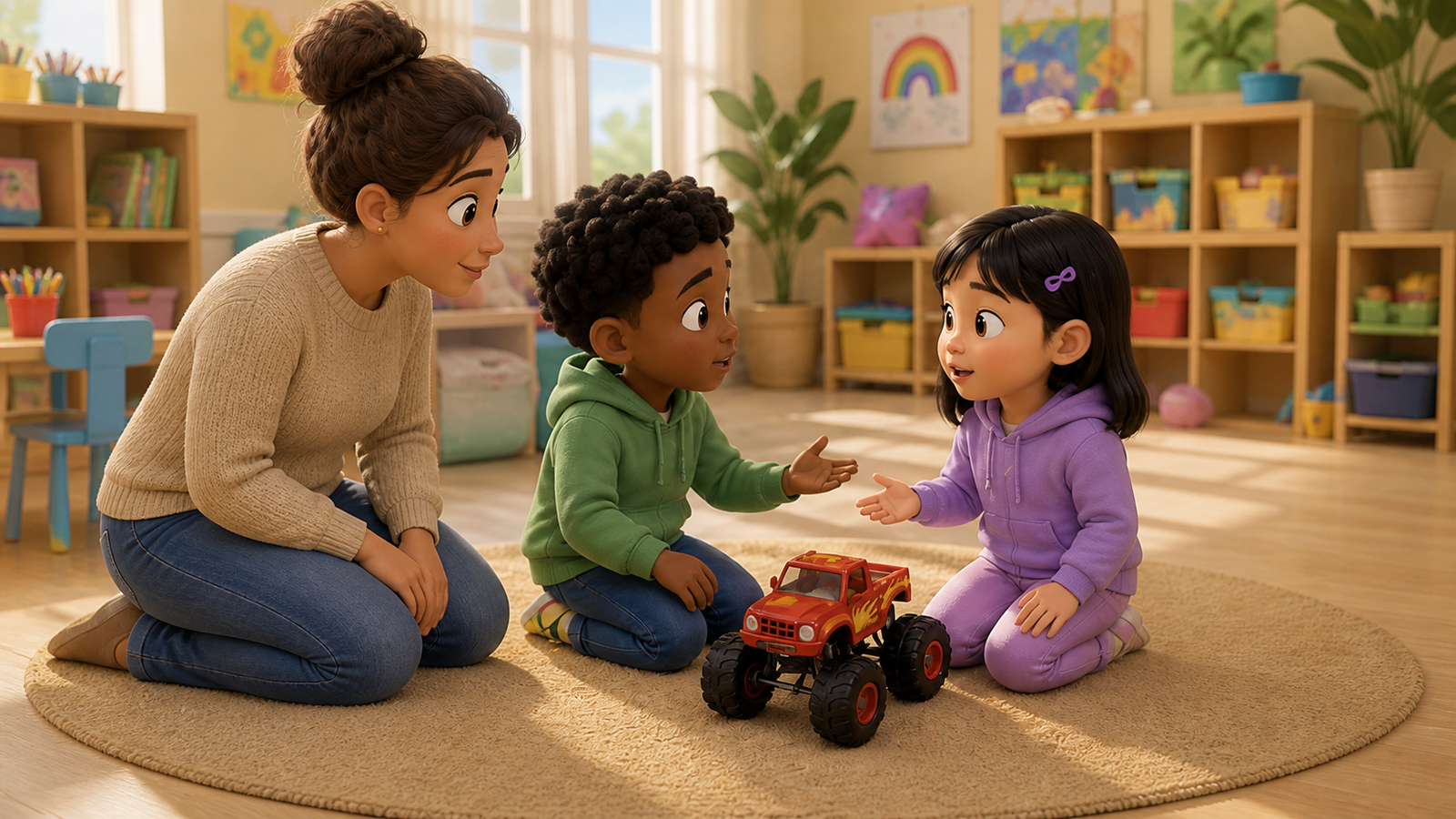
Give each child one turn to speak. Keep the sentence about the moment, not about the other person’s character. These simple frames can help:
- “I felt ___ when ___.”
- “I wanted ___.”
- “Next time, please ___.”
For example, a child might say, “I felt left out when the game started without me,” or “I was upset when my tower was knocked down.” An adult can offer feeling words, but should not decide the whole story for the child.
If the children disagree about what happened, you do not need to hold a courtroom. Reflect both views in neutral words: “You thought the block was free. You were still using it.” Then move toward what will help now.
3. Choose a repair that fits the problem
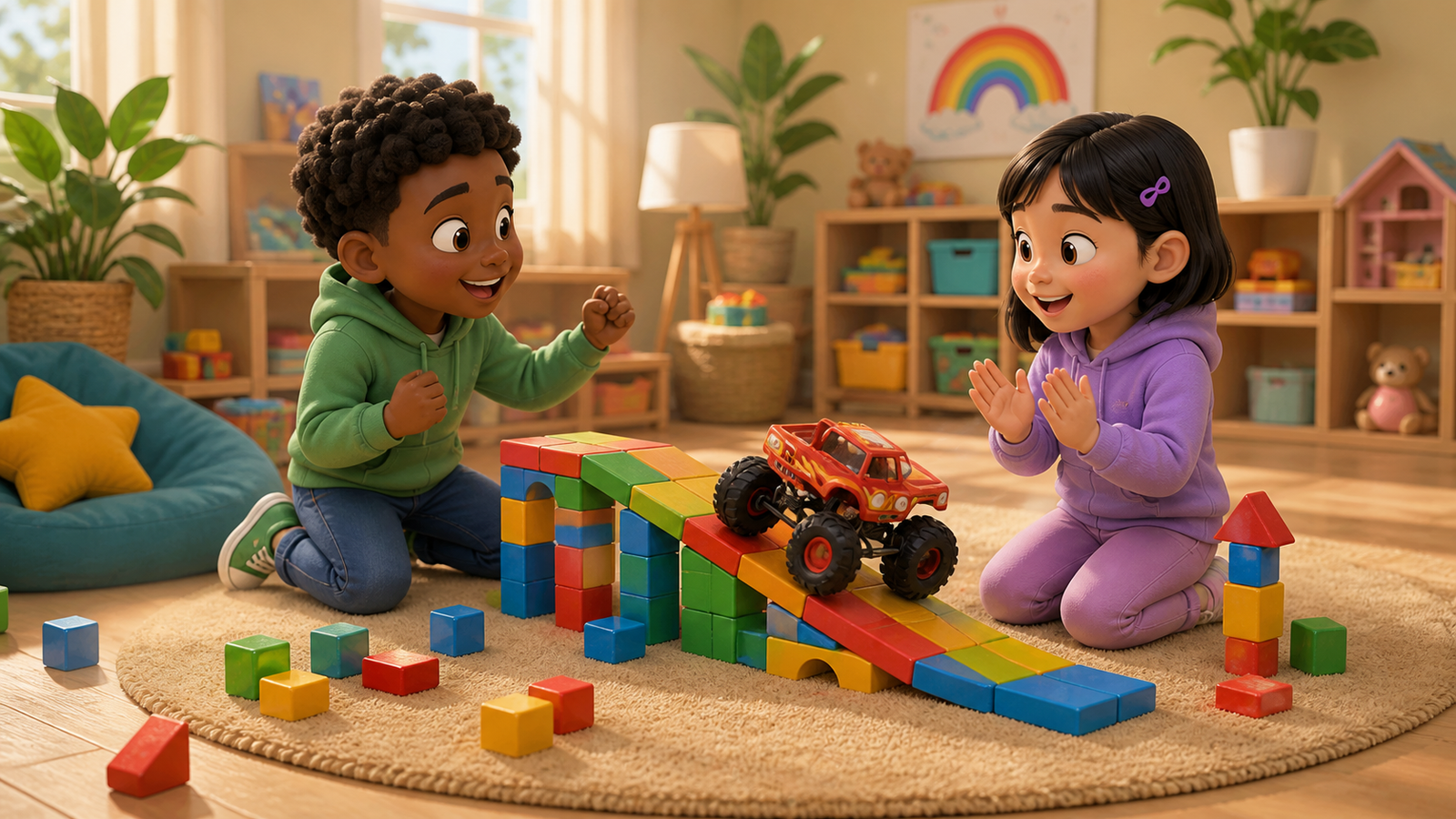
A repair is an action that helps make the situation better. It should match the problem. Useful repairs might include:
- returning an item or offering the next turn;
- helping rebuild something that was damaged;
- making space for someone to join the game;
- getting an ice pack or checking whether someone is okay; or
- asking, “Are you ready to play again?”
An apology can be meaningful, but “say sorry” should not be the only step. A forced apology may end the conversation without fixing the harm. Try asking, “What could you do to help?” or offer two choices: “Would you like to rebuild the tower or bring the blocks back?”
What the routine sounds like
Adult: “Pause. Hands down, and take one step back.”
Child 1: “I felt mad when you took the red marker. I was still using it.”
Child 2: “I wanted it for my picture.”
Adult: “What repair would fit?”
Child 2: “I can give it back and ask for a turn when you are done.”
Adult: “Good. When will the next turn be?”
Child 1: “After I color this heart.”
This example is short on purpose. Children do not need a perfect speech. One honest sentence and one useful action can be enough.
Practice when everyone is calm
Use stuffed animals, dolls, or a quick role-play to rehearse the routine before a real disagreement happens. Act out a small problem, then let the child choose a repair. Switch roles so the child can practice both speaking and listening.
A picture card can also help: draw a stop hand, a speech bubble, and a small bandage or heart. Point to each picture as you say, “Stop. Say it. Repair it.” Children who need more time can point, choose between two words, or ask an adult to speak with them.
When children are not ready to repair
Do not force children to hug, forgive, or return to play right away. One child may need space. The other may need help managing disappointment. You can say, “You are not ready to play together yet. We will keep everyone safe and try the repair again later.”
If the same conflict happens often, look for the need underneath it. The children may need duplicate materials, shorter turns, a clear joining-in phrase, or closer adult support. Changing the setup is not giving up; it can make the skill easier to practice.
Help friendship skills grow
Notice the specific action instead of giving broad praise: “You stopped your hands,” “You told her what you needed,” or “You chose a repair that helped.” Specific feedback shows children which skill to use next time.
For more ways to practice listening and teamwork, try the Back-to-Back Drawing Directions Game. You can also explore KidNation’s guide to friendship for kids.
KidNation takeaway
Keep the routine simple: stop and settle, say what happened, and choose one action that helps. Repair matters more than a forced apology.