
KID-FRIENDLY ACTIVITY GUIDE
Give two partners paper and crayons, then let one describe a simple picture while the other draws without seeing it. Start with just two shapes. The fun comes from asking questions and comparing pictures, rather than making an exact copy.
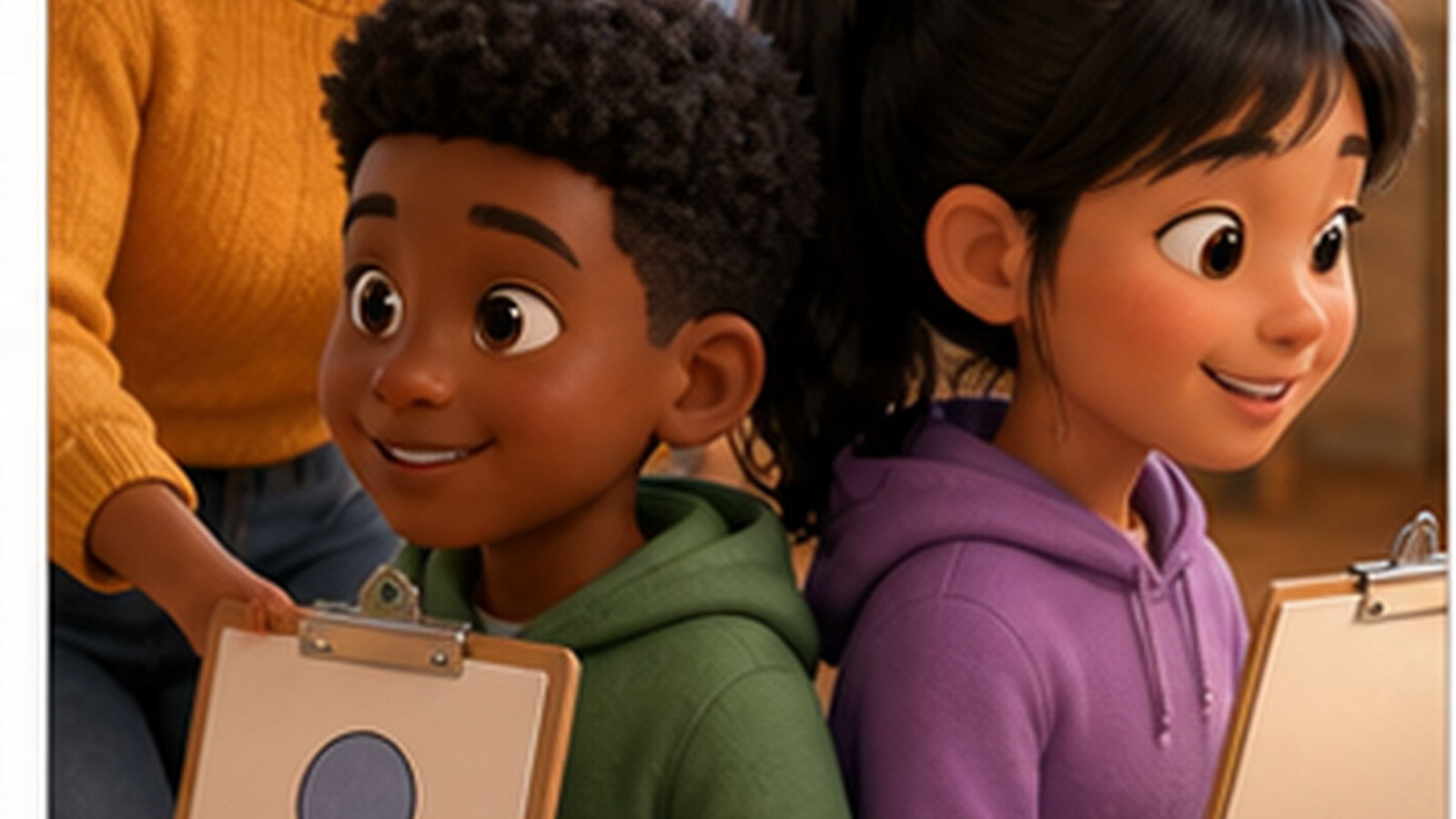
What you need
- Paper and a thick pencil or crayon for each partner.
- A simple picture made from two or three large shapes.
- A comfortable place to sit back-to-back, or a divider between partners.
Try a short round with children ages 5–8 and adult support. Choose a seated arrangement that feels comfortable; partners do not have to sit back-to-back.
How to play the drawing directions game
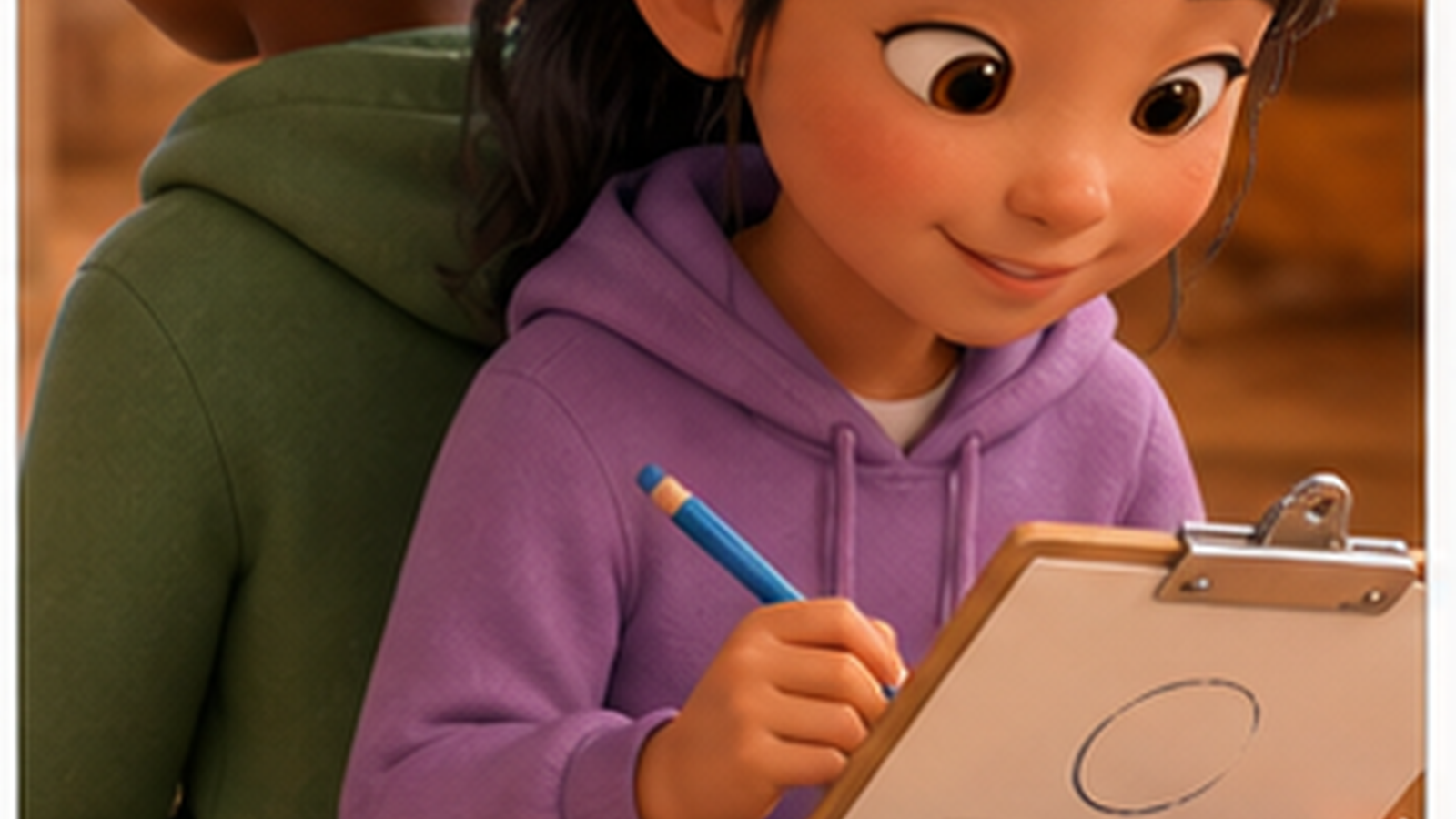
- Prepare a picture. One partner draws two large shapes on a card and keeps it hidden from the listener.
- Describe one part. Name the shape, its size, and where it goes on the page.
- Welcome questions. The listener draws and may ask the speaker to repeat or explain a direction.
- Compare the pictures. Turn around and notice what is similar and what surprised you. Avoid scores or judging drawing ability.
- Swap roles. Choose a fresh design so both partners can practice describing and listening.
A two-shape example
Try this speaker script: “Draw a big circle in the middle of your page. Draw a small triangle above it.”
The listener might ask, “Should the triangle touch the circle?” The speaker can answer, “Leave a little space.” Compare the drawings and talk about which words made the instruction clearer.
For another round, put a square beside the circle. Use words such as above, below, beside, and inside, with a demonstration first when needed.
Make the game fit your child
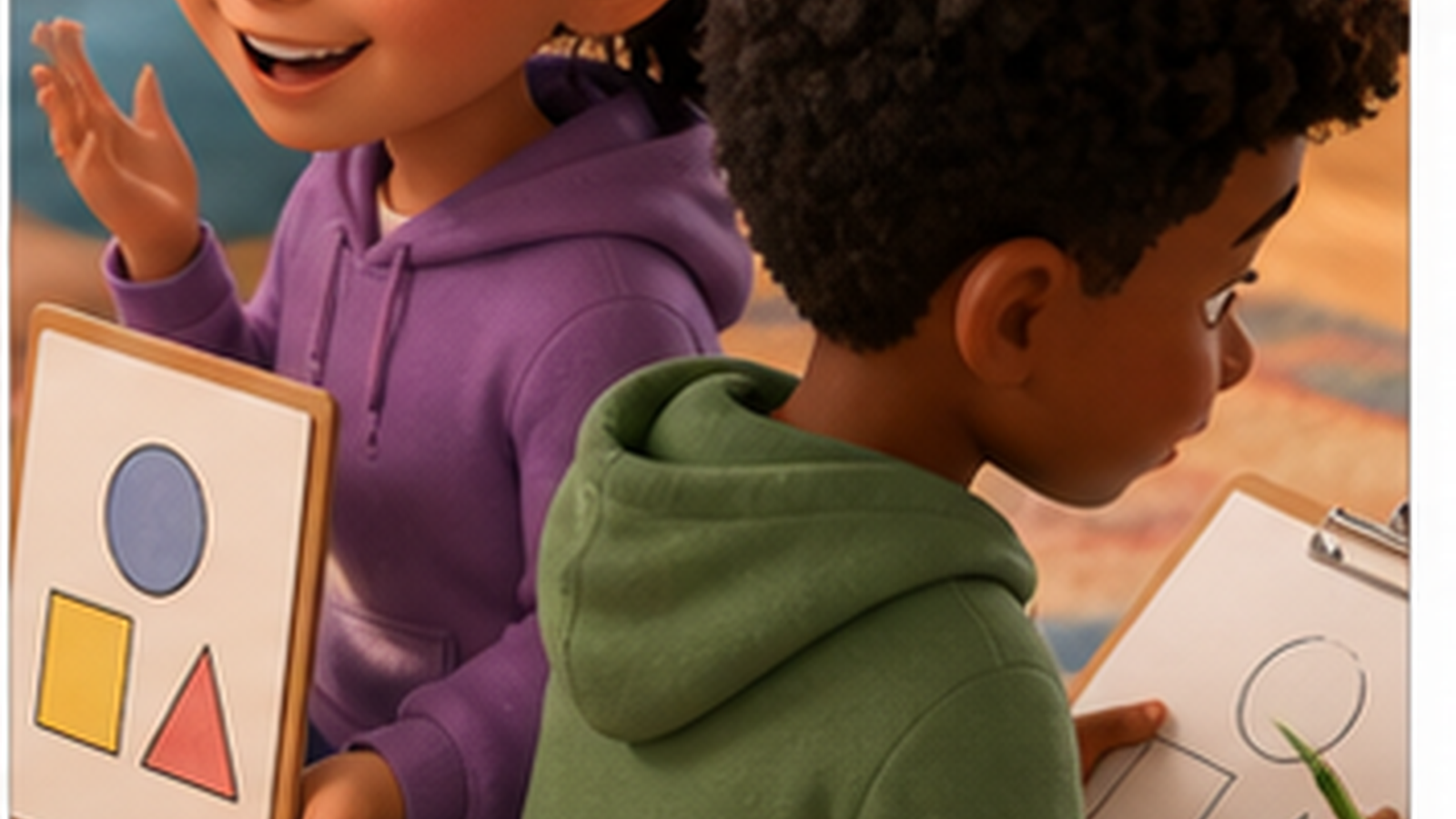
Easier: Start with one shape, show a reference first, or let an adult model both roles. Keep the picture visible if hiding it adds frustration.
More challenging: Add a third shape or let the child design the next card. Ask the speaker to clarify one instruction rather than making the whole picture more complicated.
Different ways to join: Use a divider, sit side by side, point to shape cards, use a communication device, or work with an adult partner. Describing and listening can happen without drawing independently.
When the pictures look different
Say, “Which instruction could we make clearer?” Look at one difference together and try that direction again. A different picture is a reason to ask questions, not a failure.
If someone rushes, describe only one shape before pausing. If a child wants to stop, end the round and return another day.
One question to finish
Ask, “Which clue helped you most?” Choose one useful observation rather than turning the ending into a quiz.
Try another clue-giving activity
Practice describing familiar objects with our mystery object description game. Partners can share clues about texture and shape before revealing what they chose.