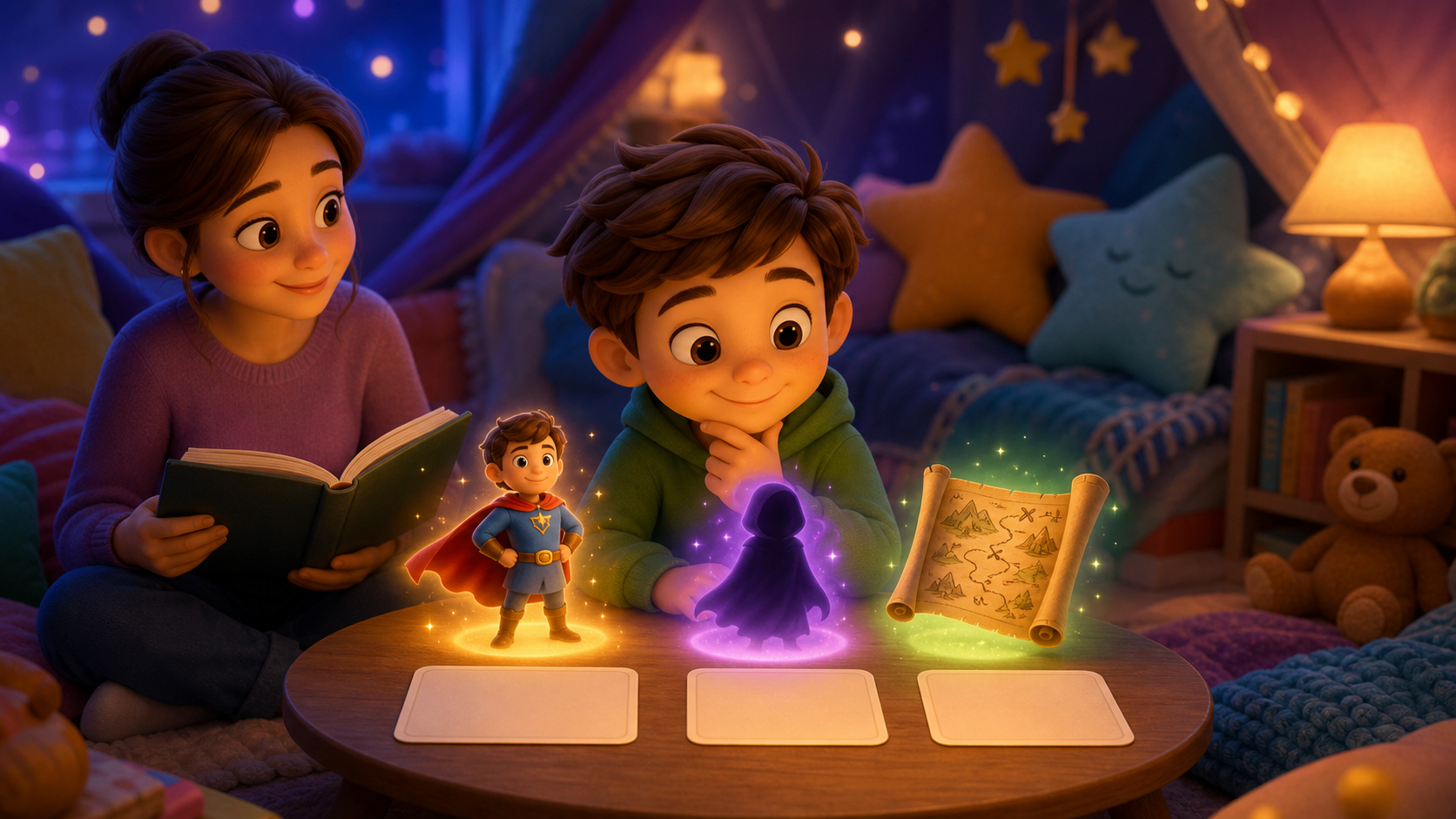
At the kitchen table, a child taps a spoon and asks whether the hero should pick a glowing key or a lost map. That tiny choice is the Storyteller review point.
A Small Choice Before Reading
At the kitchen table, a child taps a spoon and asks whether the hero should pick a glowing key or a lost map. That tiny choice is the useful review point for KidNation Storyteller.
Storyteller gives kids a guided way to choose a hero, a villain, a setting, and a story direction. The result is a 10-page story moment that families can read aloud and talk through together.
When the Story Gets Stuck
The first burst of excitement can shrink fast. A child may pick too quickly, get frustrated, or want to restart before the story has room to breathe.
Keep the routine small. Ask for one decision, one prediction, and one sentence about what changed. The goal is not a perfect book report. The goal is a child who remembers a detail and says it back in their own words.
- Ask why the hero made one choice.
- Pause on one page and imagine a new ending.
- Draw one object from the story after reading.
Try This at Home After the Last Page
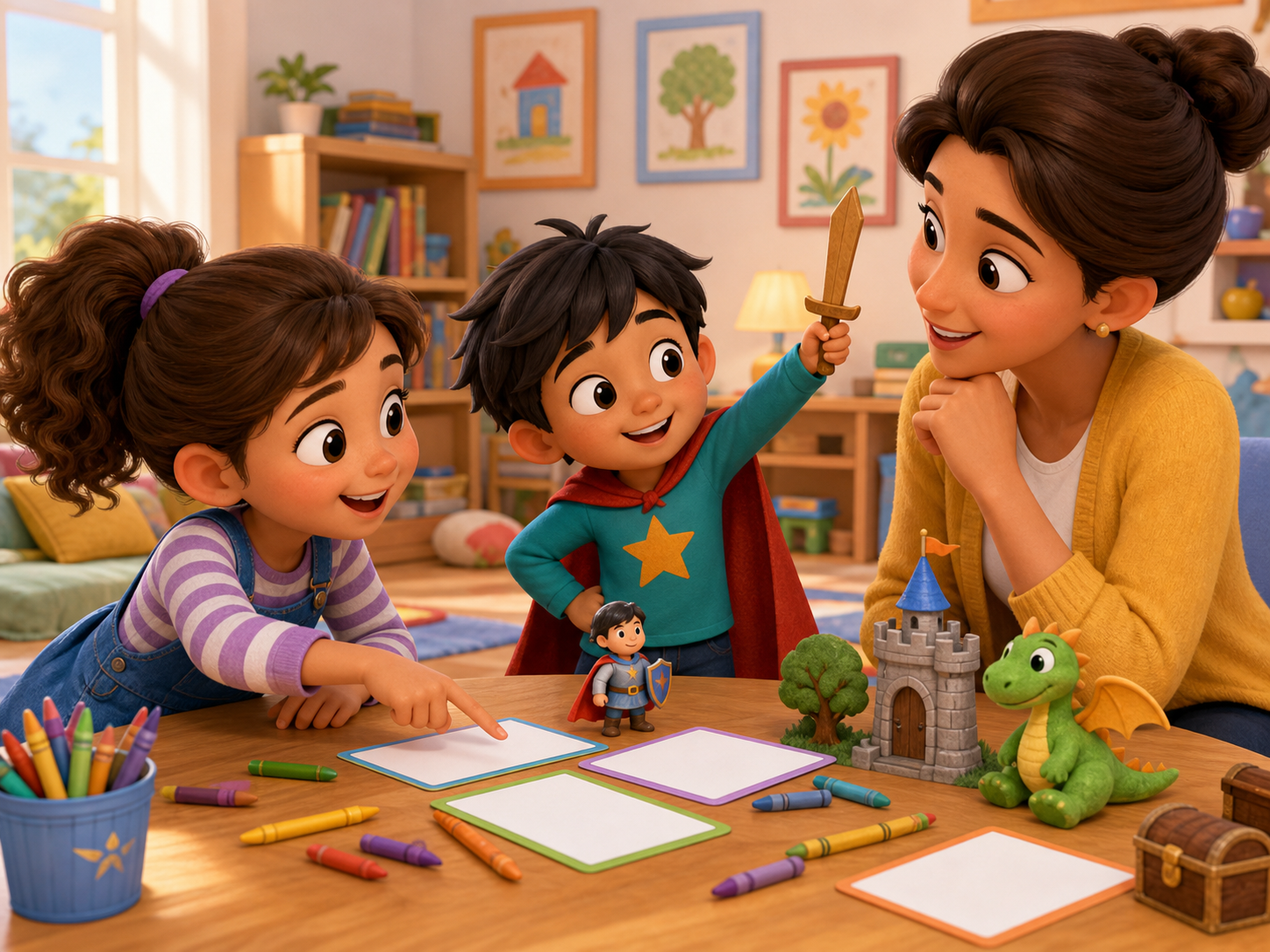
At home, put three crayons beside the book or screen. Ask your child to use each color for one part of the story, beginning, surprise, and ending. If talking feels hard, pointing works too.
This keeps personalized stories for kids grounded in conversation. A profile gives the child a familiar starting place, while the grown-up keeps the reading moment warm and reviewable.
Classroom Reading Circle
In a classroom, teachers can turn the same idea into partner talk. Students choose one hero trait, listen to a short story section, then tell a partner what the hero tried first.
Word Ninja can sit beside the activity when a story has a new vocabulary word worth practicing. Say the word aloud, use it in a fresh sentence, then return to the story.
Parent Review Notes
For review, check whether the choices feel clear and age-aware for kids ages 5-8. The Storyteller draft should invite reading aloud, not silent scrolling.
Also check that the story does not promise advanced personalization beyond what the product supports. KidNation can describe choices, profiles, Word Ninja, and creative activities without overstating the experience.
Give the Story a Real Room to Land In
After a story ends, the best next step might be sitting right on the rug. Ask the child to point to something in the room that belongs in the next story. A blue cup becomes a magic cup. A backpack becomes a mountain cave. The story stays connected to real objects, so the child has an easier time adding details.
KidNation Storyteller works well with that kind of bridge. A child can choose a hero, choose a villain, build a 10-page story, and listen through read aloud. Word Ninja can pick up one strong word from the story afterward, such as brave, tiny, hidden, or rescue, and turn it into vocabulary play.
Review the Story Without Overcorrecting
Creative reading can get stuck when every answer turns into a test. Instead of asking a long list of questions, ask one noticing question. Which part surprised you? Which character made a good choice? Which page would you change? The child gets to talk about meaning without feeling trapped.
If the child gives a tiny answer, accept it and add a small follow-up. A parent might say, show me the page. A teacher might say, tell your partner one thing the hero did. A child profile helps keep these story patterns tied to the reader, which is useful when siblings have different confidence levels around reading.
Save One Choice for Tomorrow
Story time does not need to solve every reading goal in one sitting. Save one choice for the next day. The child can choose a new villain, a new setting, or one word to reuse. That small thread gives tomorrow a starting point.
This is especially helpful after a hard day. If a child refuses to read, the saved choice can be the doorway back in. No lecture is needed because the grown-up can return to the moon cave, the silly robot, or the brave hero from yesterday. The child hears continuity, not pressure, and the story has a place to begin again.
Let Drawing Carry Part of the Reading
Some children talk more easily with a crayon in hand. After listening, ask the child to draw one object from the story and explain why it matters. The drawing does not need to be accurate. It only needs to give the child a concrete way to retell one piece of the plot.
In a classroom, this can become a quick partner routine. One student draws the object, and another asks one question about it. At home, the drawing can stay on the fridge until the next story session. That visible trace reminds the child that reading leaves something behind, even when the book is closed and the room has moved on to dinner or cleanup. It also gives tomorrow’s story a friendly place to start.
FAQ
Is Storyteller meant to replace reading with a grown-up? No. Treat it as a shared starting point.
What should parents watch for in review? Look for clear choices, gentle pacing, and story details a child can explain back.
Where does KidNation fit? KidNation brings Storyteller, Word Ninja, profiles, and curated creative activities into one parent-reviewable experience for kids ages 5-8.