
KID-FRIENDLY ACTIVITY GUIDE
Leaf rubbings help children notice veins, edges, and patterns while turning a few fallen leaves into simple art.
Activity at a glance
Ages: 5–8, with adult support.
Materials: Two safe, dry fallen leaves, plain paper, and a peeled chunky crayon.
Suggested time: Allow about 5–10 minutes, plus time to collect leaves with an adult.
Try leaf rubbing with children ages 5–8 to reveal veins and edges under paper. Begin with one familiar leaf and a light touch, then compare a second leaf.
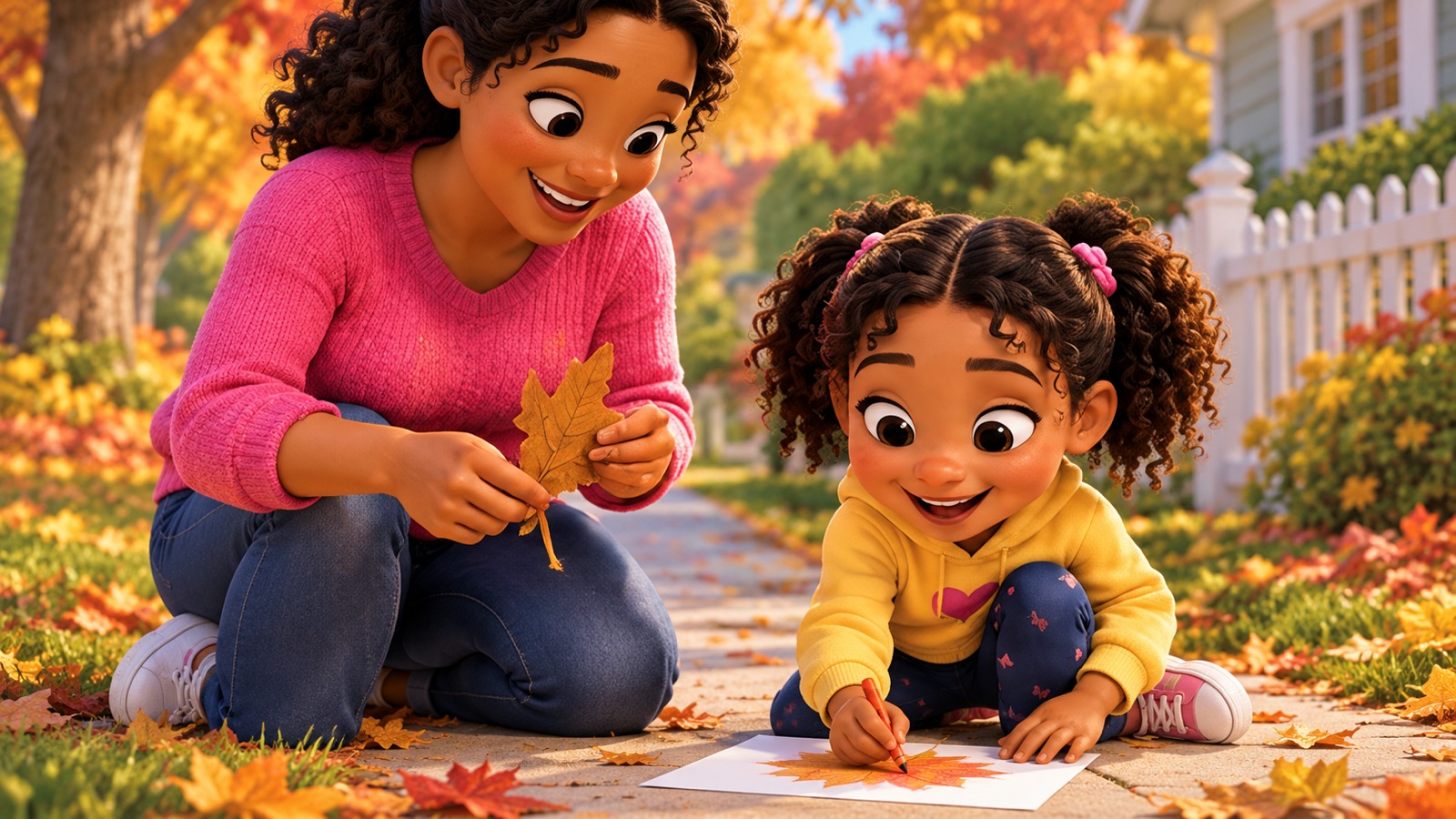
Choose safe fallen leaves
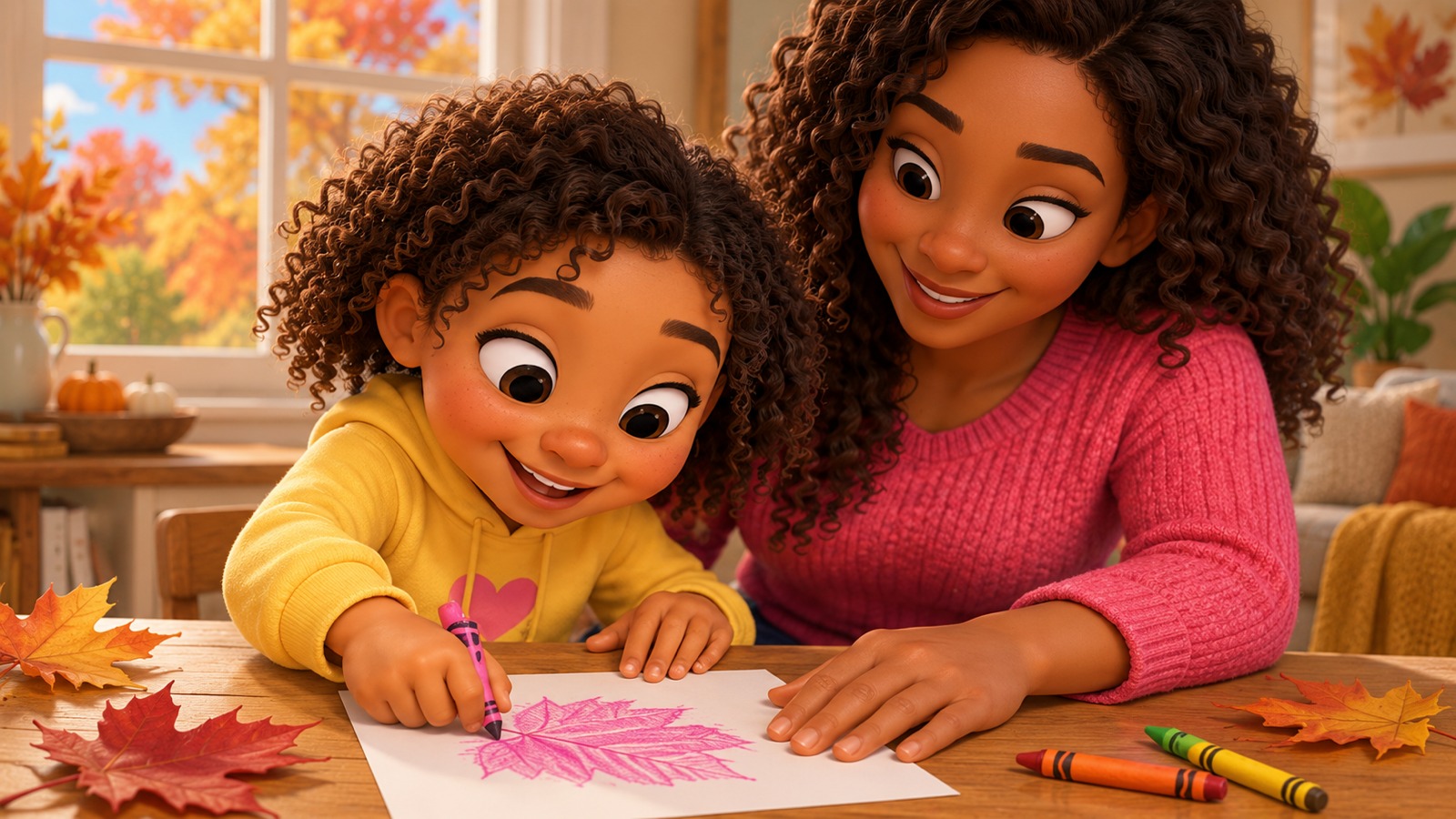
With an adult, collect two dry fallen leaves from a familiar permitted area. Avoid unknown plants, moldy leaves, and anything near traffic.
Choose intact leaves from plants the adult knows are safe to handle. Leave unknown, irritating, dirty, or moldy leaves where they are, and wash hands after the activity.
Prepare the paper
Place one leaf vein-side-up on a clear table and cover it with plain paper. An adult can steady the paper.
Feel for the raised veins and put that side toward the paper. Hold the edges steady or have an adult keep the paper from sliding while the child rubs.
Reveal the texture
Rub the side of a peeled chunky crayon gently across the paper until the veins and edge begin to appear.
Use the side of the crayon with light pressure. Start at one edge and move across slowly; press less if the paper tears or the whole area becomes a solid block of color.
Compare another leaf
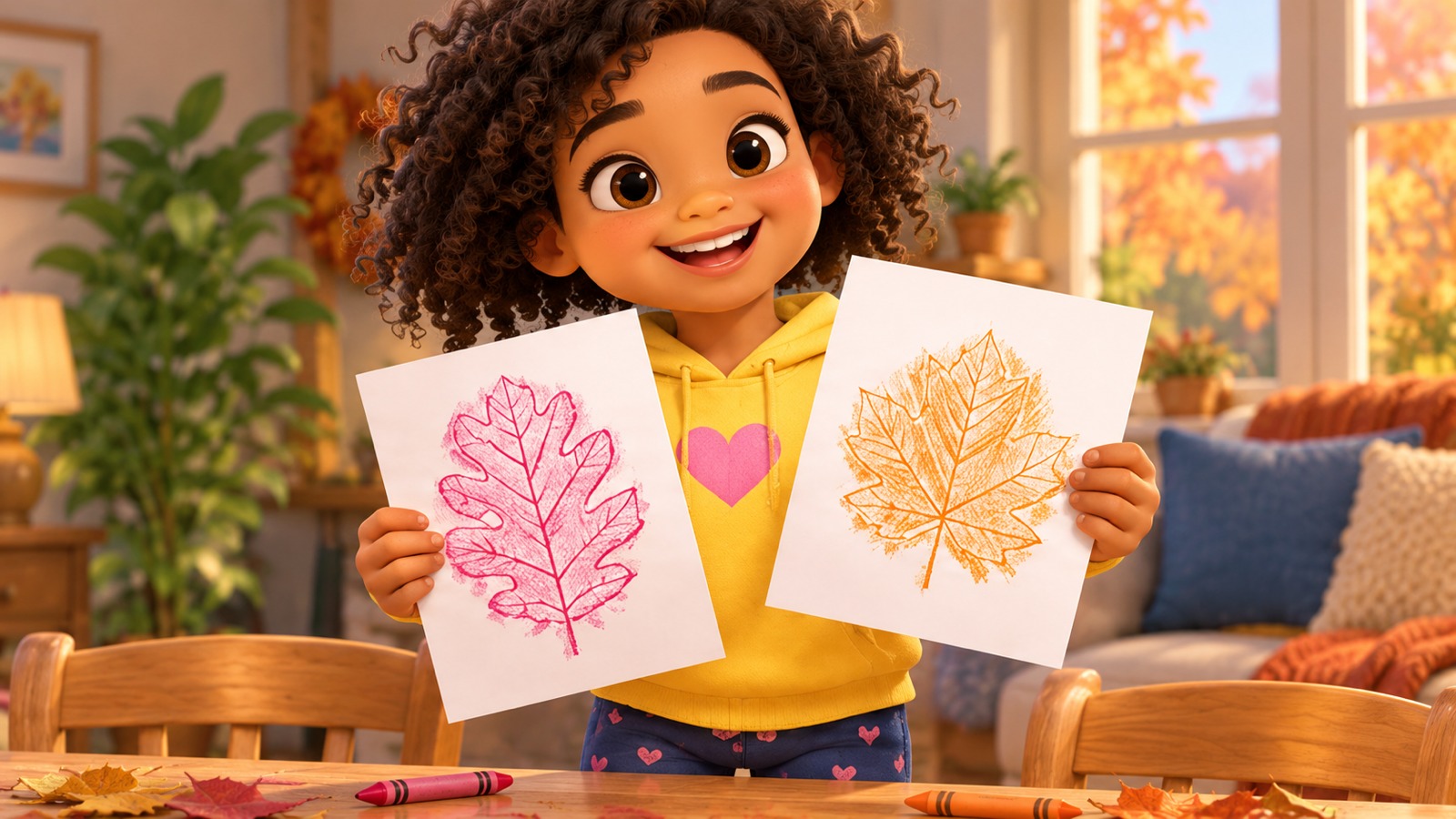
Repeat with a different broad leaf and notice which lines, shapes, and edges look similar or different.
Place the second rubbing beside the first. Ask the child to find a branching line, a smooth edge, or a pointed tip in each picture without needing to name the plant.
Finish and clean up
Display the rubbings, put crayons away, wipe the table, and return unused natural items where appropriate.
Label the pictures with the child’s own observations, such as “many little lines.” Keep the artwork, tidy the materials, and wash hands after handling leaves.
Why is the outline faint?
Check that the leaf is vein-side-up and that the paper is not too thick. Try the side of a crayon and a lighter touch before changing materials.
Make the comparison easier
Use the same crayon and paper for both leaves. Ask one question at a time: “Which rubbing has more visible branching lines?” The activity is about looking closely, not identifying a leaf correctly.
KidNation takeaway
Use fallen dry leaves, chunky crayons, a clear table, and adult guidance; never pick unknown plants or taste materials.
Try another KidNation activity
Choose your next activity: an outdoor shadow observation or a neighborhood shape-spotting walk.