At 7:12, one sock is missing, the sink is splashed, and a child insists they already washed their hands. Simple hygiene routines work better when kids can see the steps and practice them without a lecture.
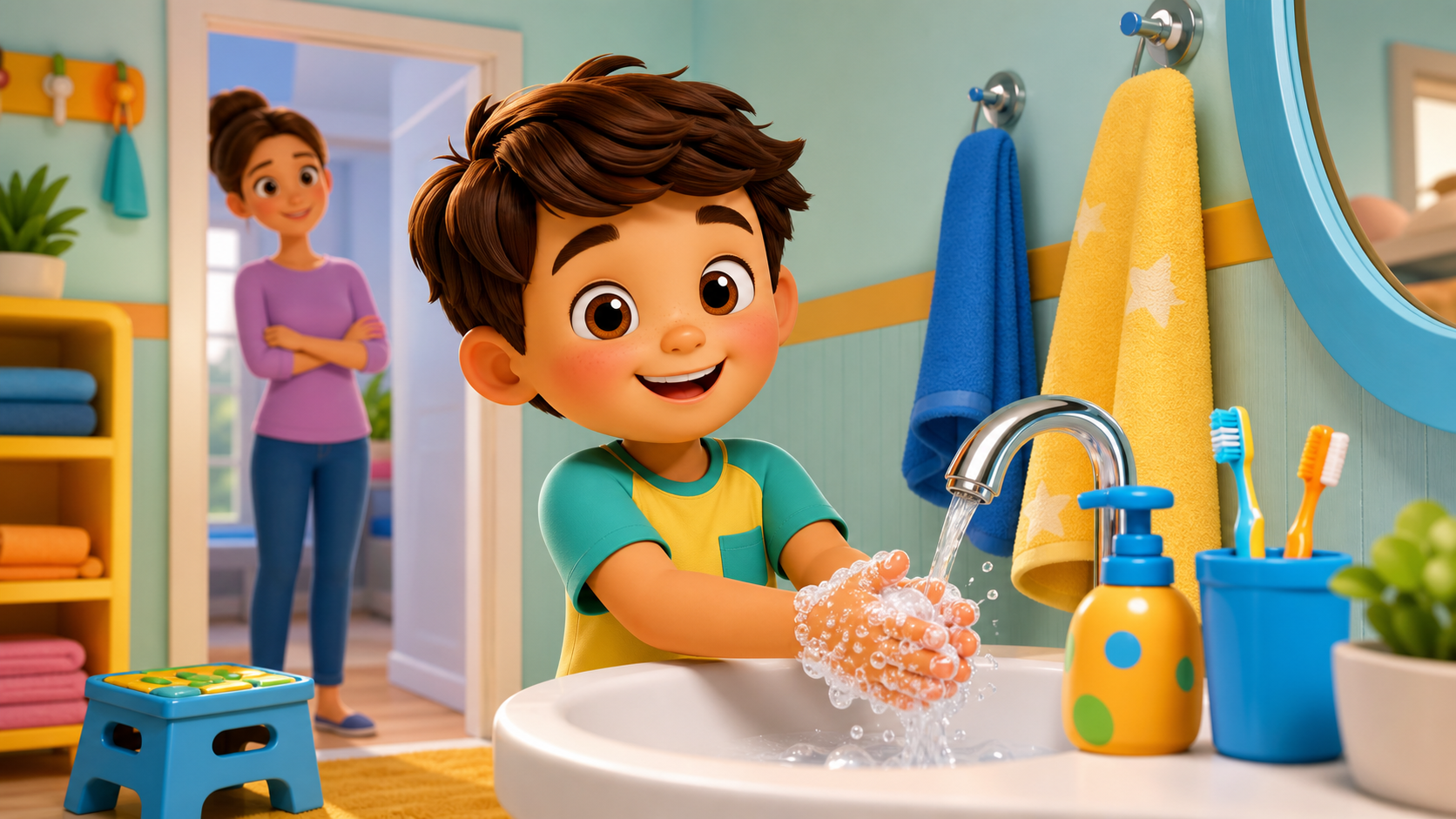
Staying clean is easier for kids when it becomes a routine they can remember, not a lecture they hear after something is already messy. Kids ages 5-8 need clear words, visible steps, and a little practice.
The goal is not perfection. The goal is helping kids notice what needs to happen next: wash, rinse, dry, put away, or try again.
Make the Clean-Up Steps Visible
Kids may say they washed hands, brushed well, or cleaned up because they started the task. They still need help finishing all the steps in order.
A short routine makes the invisible parts visible. Instead of “stay clean,” use a small script like “soap, scrub, rinse, dry” or “toys in bin, clothes in basket, hands washed.”
Turn One Routine Into Four Words
Pick one hygiene routine and turn it into a four-word chant. Keep it light so it feels like a cue, not a scolding.
- Choose one routine, such as washing hands before snack.
- Say the four steps together.
- Let your child point to each step as they do it.
- Ask which step is easiest to forget.
If your child rushes or gets frustrated, practice when nobody is late. A calm rehearsal makes the real moment easier.
Practice Routine Words in Class
Teachers can use a quick “routine words” warm-up before snack, art, recess, or cleanup.
- Write four routine words on the board.
- Ask students to act out each word silently.
- Have partners put the words in order.
- Close with one sentence about why the order matters.
This turns hygiene language into a short vocabulary and sequencing activity.
When Kids Rush the Steps
Word Ninja supports vocabulary practice with routine words like wash, rinse, scrub, clean, and dry. Storyteller can turn a daily habit into a 10-page illustrated read aloud where kids choose the hero, villain, setting, and genre.
Use Objects as Gentle Reminders
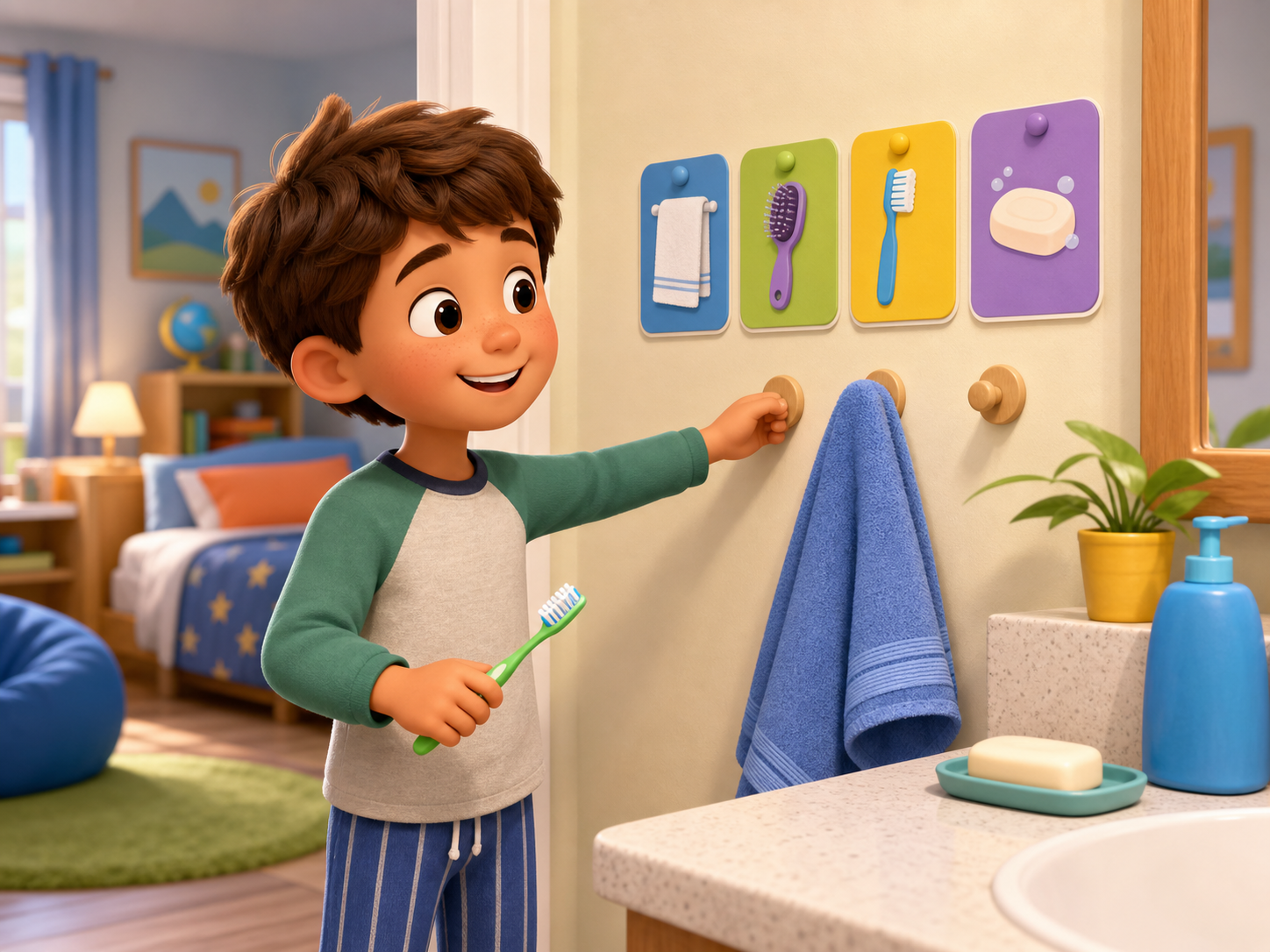
A towel on the hook, a toothbrush by the sink, and a clean shirt on the chair can do more than another spoken reminder. Kids ages 5-8 often move faster when the room shows the next step. The object becomes the cue, and the grown-up gets to say less.
KidNation can extend that cue into language practice. Word Ninja lets a child rehearse words like scrub, rinse, germs, fresh, and tidy in a playful way. Storyteller can turn a routine into a short adventure where the hero meets a messy villain, follows a 10-page path, and hears the story read aloud. The hygiene words stay connected to a scene the child remembers.
Make the Routine Easy to Repair
Clean habits fall apart when the only feedback is correction. If a child skips soap, rushes teeth, or leaves clothes on the floor, pause the routine instead of restarting the whole morning. Point to the missing step and ask for one repair. That keeps the moment from becoming a contest.
A simple repair sentence works well when it names the missing step without turning the moment into a scolding speech. Hands need soap before rinse, teeth need two sides before done, and clothes need the basket before play. A child profile inside KidNation can keep practice tied to that child’s current routine, so one child works on brushing while another practices backpack cleanup or bedtime order.
Let Clean Language Travel
The strongest hygiene routines travel from bathroom to classroom to backpack. A teacher might ask students to act out wash, dry, toss, and line up. At home, a parent might use the same verbs before dinner. Repeated words make the routine easier to remember when the child is tired.
If the child resists, use fewer words. Say first soap, then snack. Say brush, then book. The shorter cue lowers the temperature of the room. Over time, the child starts to hear hygiene as a normal part of the day, not as a speech they have to survive.
Build a Before-and-After Check
Some hygiene routines need a visible finish line. Before hands are washed, the child can name what feels sticky, dusty, or muddy. After washing, they can name what changed. The same check works with teeth, hair, clothes, and lunch cleanup because it turns clean into something the child can notice.
This also helps when a routine gets rushed. A parent can ask, what changed, instead of giving a full speech about germs. In class, students can use the before-and-after language after art, recess, snack, or science. The routine becomes practical vocabulary, and the words make the habit easier to repeat. If the child still skips the ending, add a visual finish such as the towel back on the hook or the cap back on the toothpaste. For a child who needs movement, the finish can be a quiet thumbs-up at the mirror. That small signal keeps the routine warm and steady.
FAQ
How can parents teach hygiene without nagging?
Use the same short cue every time and practice when everyone is calm. Kids respond better to clear steps than repeated reminders.
What if a child skips one step every time?
Name that step before the routine starts. You can also let the child point to a picture or word card as they complete it.
Can hygiene routines become classroom vocabulary practice?
Yes. Words like scrub, rinse, clean, dry, sort, and tidy are useful action words for sequencing and classroom routines.