
Make a color game with six everyday objects and a clear space to play. Children can sort matching colors, describe shades, or finish a repeating pattern. Choose a version that feels interesting today; the age ranges below are suggestions rather than rules.
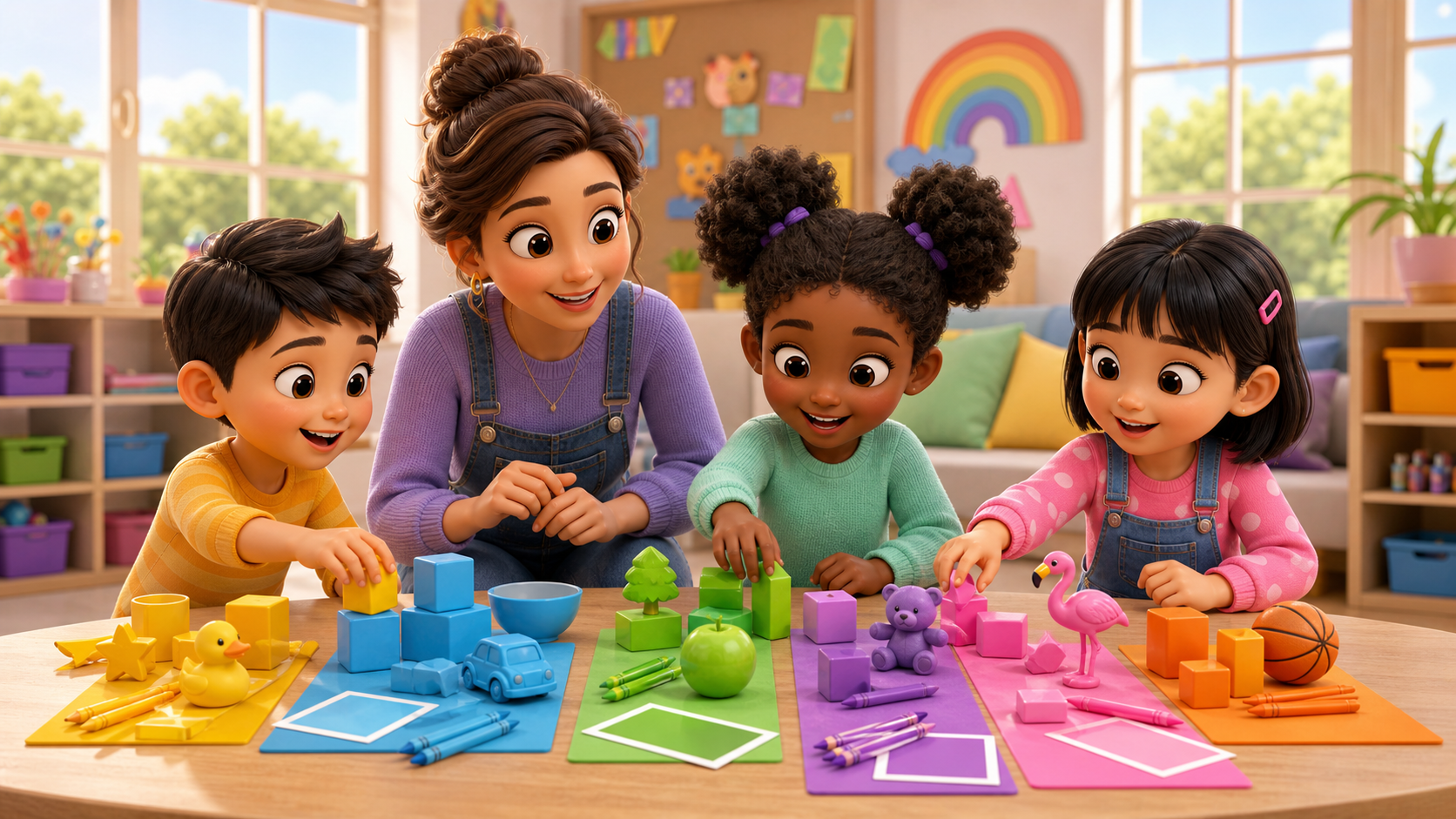
Quick start: choose one color game
Materials: Six large household objects, with optional crayons and paper. Avoid small or breakable pieces.
Suggested time: 5–10 minutes. Players: A child with an adult, siblings, or a small group.
Sorting: Group a red shirt, a blue book, and other objects by color. Clues: Describe a visible object with its color and one other feature. Patterns: Draw red-blue-red-blue and invite the child to choose what comes next.
Start with Sorting at Ages 5-6
For younger children in this range, keep color activities physical and quick. Place six household objects on the table and ask the child to group them by color. Then change the rule: sort by light and dark, warm and cool, or favorite and not favorite.
Start with one lively color hunt, then ask the child to find one matching color nearby.
Add Describing Words at Ages 6-7
Move beyond naming. Ask the child to compare two shades using words such as bright, pale, deep, shiny, or dull. Pick one object and build a two-clue riddle: “I see something green and bumpy.” The other player guesses.
If the child repeats the same word, place three describing choices on paper. Pointing to a word counts as participation.
Build Patterns and Stories at Ages 7-8
Older children can use color to organize a pattern or tell a short story. Draw a repeating sequence, then leave the final two spaces blank. Ask the child to complete it and explain the rule. For a story version, choose three colors and give each one a job, feeling, or place.
Use One Mixed-Age Classroom Challenge
Place color cards around the room. Call out a clue instead of a color name: “Find a color that reminds you of water” or “Stand by a color that feels energetic.” Students choose, then explain their answer to a partner. Different answers are welcome when the explanation fits.
Make Room for Different Responses
If color matching is difficult or uninteresting, use texture, shape, written labels, or a partner’s help. A child can point, sort by touch, or describe a feature other than color. Some children may argue that an object belongs in two groups or may identify colors differently. Ask what clue they used. Accept texture, brightness, pattern, and personal association as valid parts of the conversation. The goal is careful noticing and clear explanation.
What if my child already knows every basic color?
Shift to comparison, pattern, mood, or storytelling instead of adding obscure color names.
Can I run this without art supplies?
Yes. Use clothing, food packaging, book covers, or objects already in the room.
Turn describing words into clues with our mystery object description game. Choose the variation that fits today and take turns noticing something new.