
KID-FRIENDLY ACTIVITY GUIDE
Put a familiar object in a cloth bag and invite your child to describe it before naming it. Take turns giving clues about shape, texture, and size, then reveal the object together.

What you need
- An opaque cloth bag or pillowcase.
- One clean, familiar object that is unbreakable and too large to swallow, such as a large sponge or soft washcloth.
- A child and an adult, or two partners with adult supervision.
Try one short round with children ages 5–8, then decide together whether to play again. Children can look inside, describe an object in plain sight, or pass whenever they prefer.
Choose a safe object
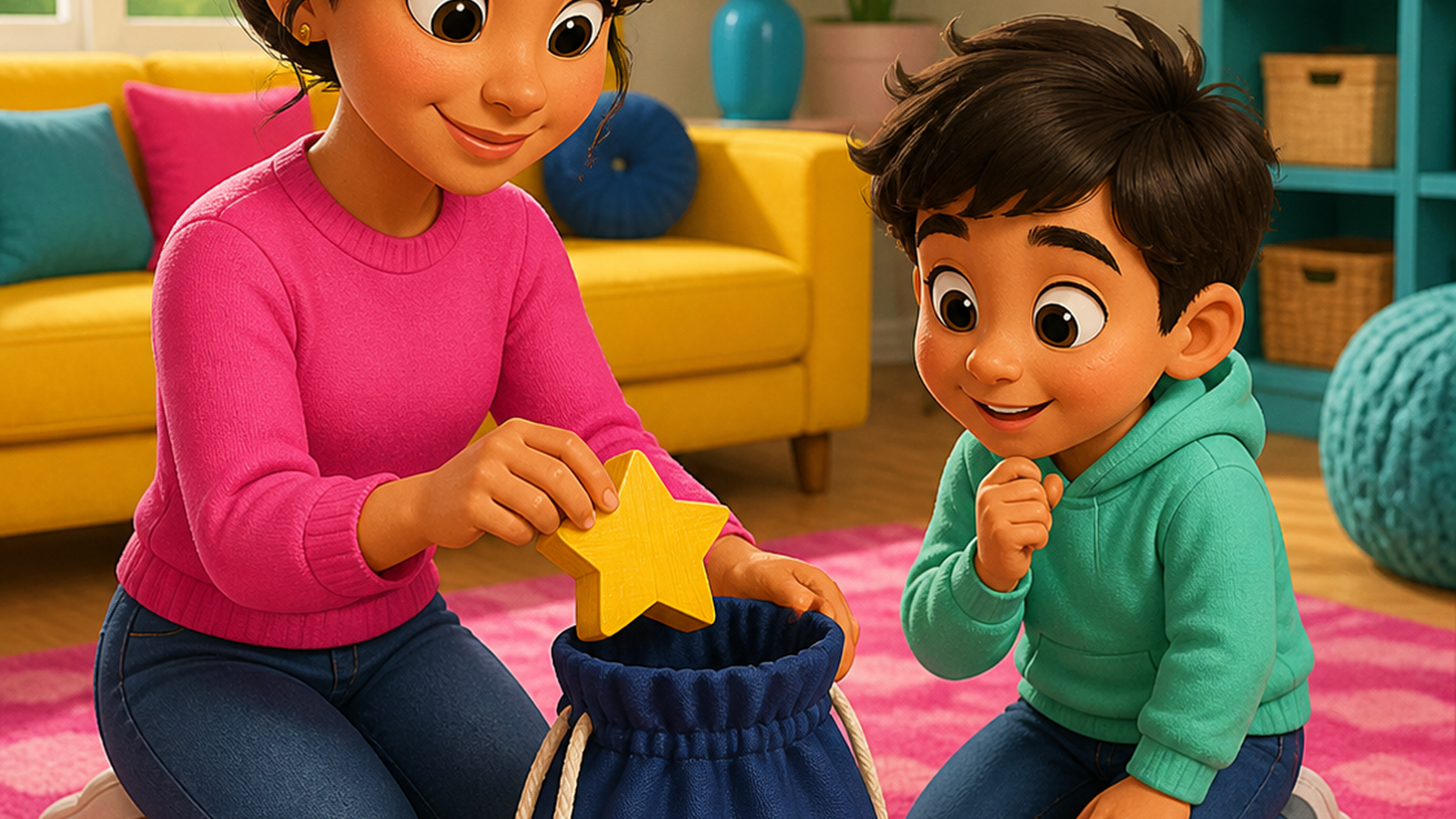
Check the object before placing it in the bag. Avoid sharp edges, batteries, food, fragile pieces, and small or detachable parts. Start with one item so the child can focus on its clues.
How to play the mystery object description game
- Choose how to explore. Invite the child to look or feel inside the bag. Explain that looking is always allowed; nobody has to touch a hidden object.
- Give one clue. Ask for something they notice without saying the object’s name: “It feels soft” or “It has a flat side.” Gestures and comparisons count too.
- Ask a useful question. The listener might ask, “Is it round or flat?” or “Does it bend?” Give the speaker time to explore before answering.
- Guess and explain. The listener makes a guess and names the clue that helped. If they are unsure, invite another clue instead of counting wrong answers.
- Reveal and swap. Take out the object and compare it with the clues. Let the child choose the next object with an adult’s approval.
An example round to try
An adult places a large sponge in the bag. The child looks or feels inside and says, “It is soft.” The adult asks, “Does it bend?” The child bends it gently and answers, “Yes, and it feels bumpy.” The adult guesses a sponge and explains which clues helped. Reveal it together, then swap roles.
Build a small clue bank
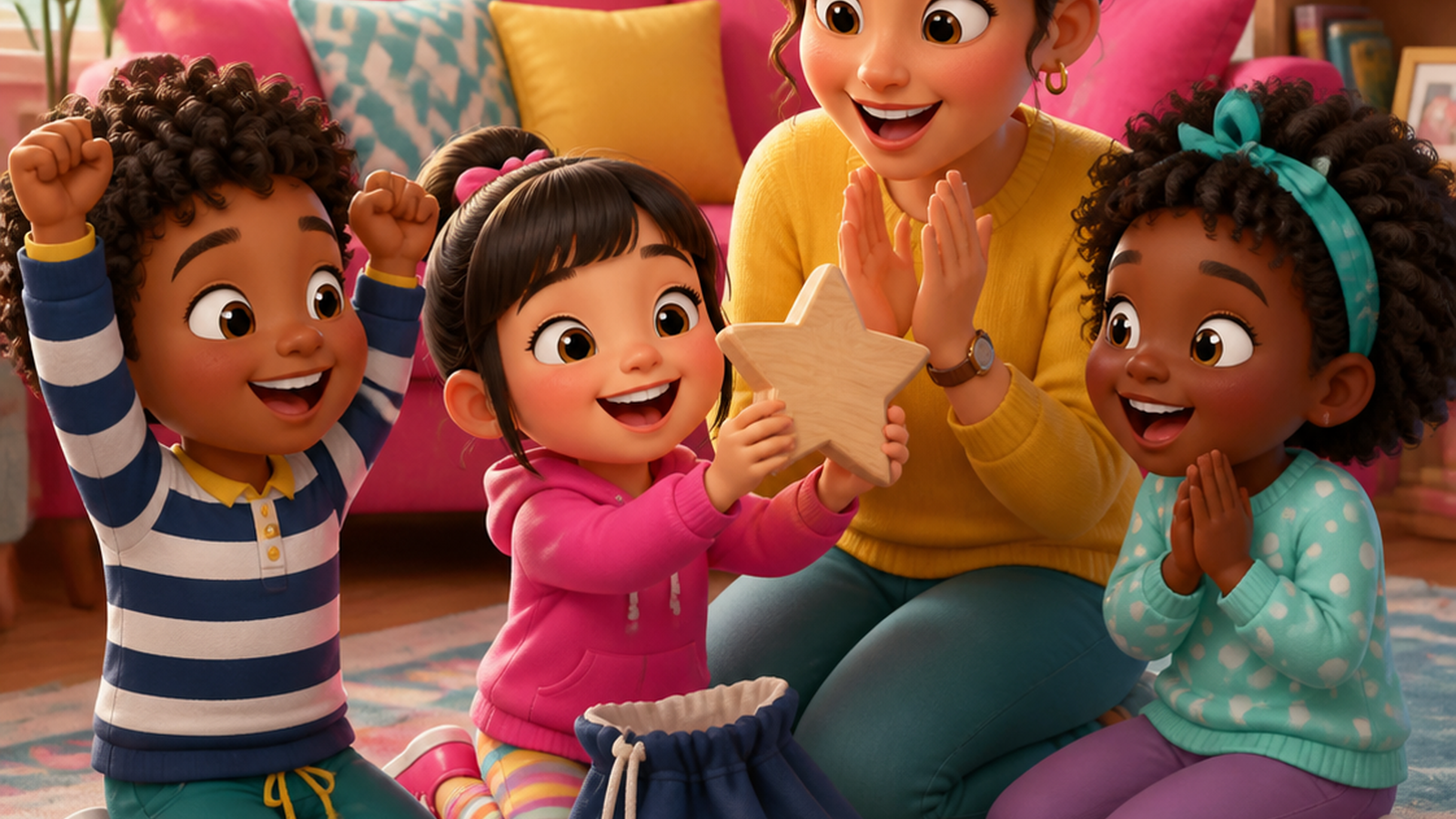
Offer two choices when finding a word feels difficult. Try soft or firm, smooth or bumpy, flat or round, and bends or stays stiff. Ask about one feature at a time. A child may point, gesture, use a communication aid, or show the object while describing it.
Make the game easier or harder
Easier: Keep the object visible, model a clue first, or let the child choose between two describing words. An observer can join when ready.
More challenging: Invite two or three clues before a guess, or ask the listener to explain why a clue fits. Keep the focus on noticing rather than speed.
For siblings or a classroom: Demonstrate a round, keep turns short, and give each partner a chance to speak and listen. Use a new safe object when swapping roles.
When the game gets tricky
If a child names the object immediately: Say, “Now let’s help someone imagine it. What does it feel like?” Knowing the name does not spoil the describing practice.
If children disagree: Look at the object together and ask which clue each person used. An object can be both round and bumpy.
If the child wants to stop: End the round, offer a look at the object if they want, and try another day. Surprise should never override comfort.
Try another clue-giving activity
Ready for another describing challenge? Try our back-to-back drawing directions game and use clues to help a partner draw. For more sorting and describing ideas, explore our color games for kids ages 5–8.