
KID-FRIENDLY ACTIVITY GUIDE
A Tape Path Direction Game for Kids
A simple painter's-tape floor path helps children practice forward, turn, pause, and turn-taking through controlled movement.
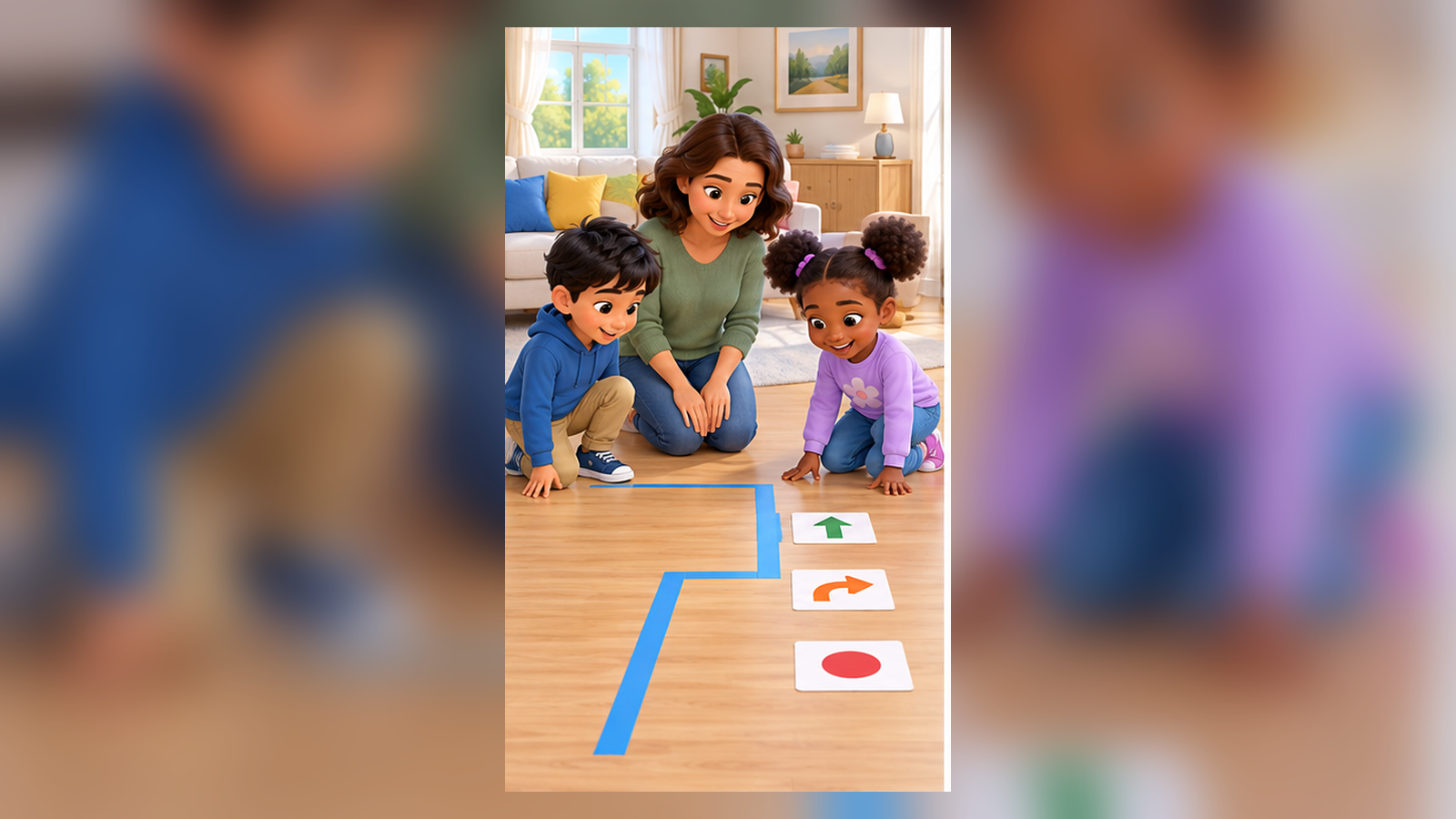
A Tape Path Direction Game for Kids can turn a familiar part of the day into a short, purposeful activity. The goal is not perfect performance. It is to give children ages 5-8 a clear way to notice, try, talk, and build confidence with adult support.
Check the floor and route
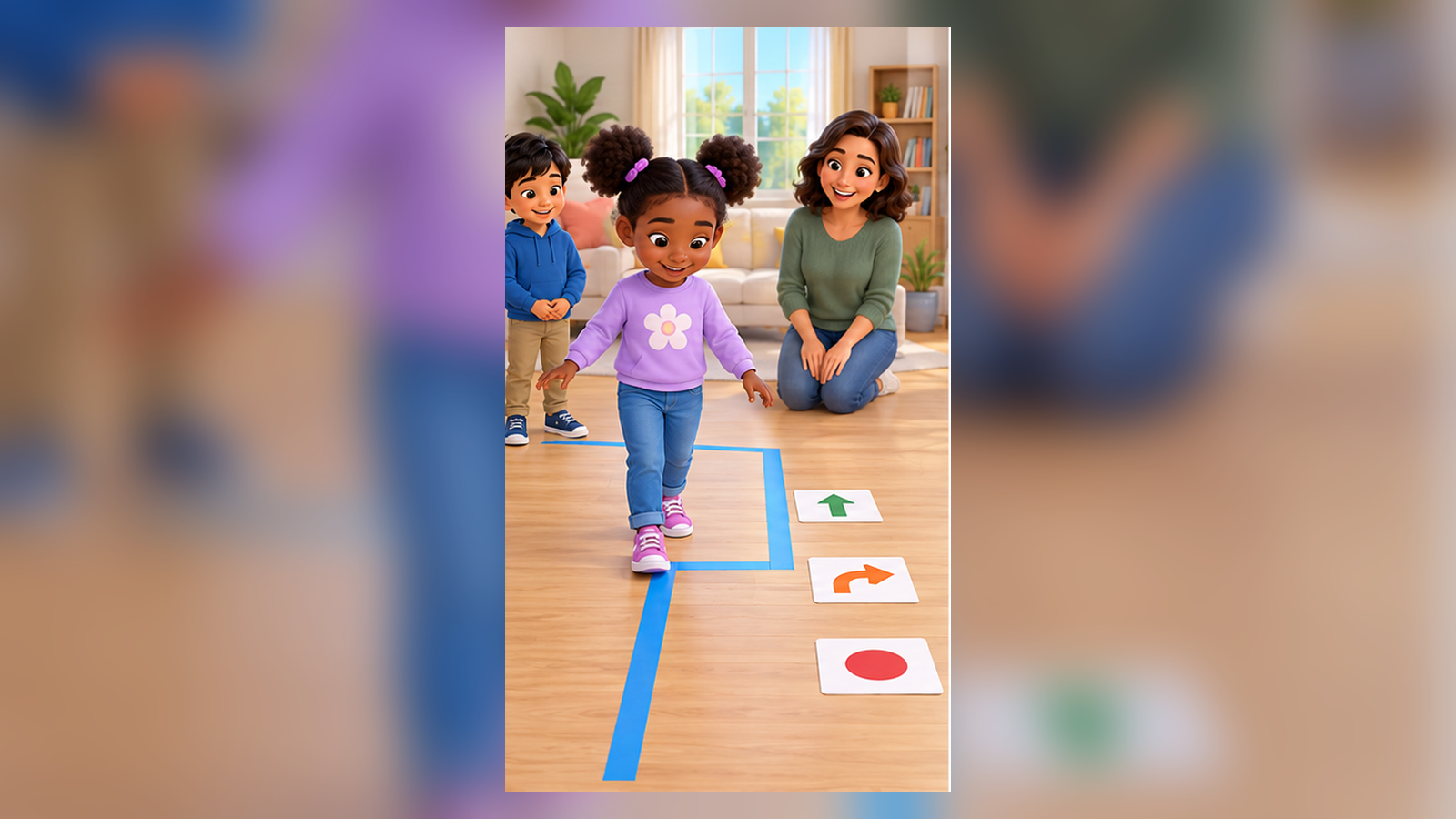
An adult tests low-tack painter's tape on a small hidden spot, then clears furniture, cords, toys, and slippery items from the full path.
Build a short simple path
Use wide straight sections and gentle turns on one level surface. Avoid stairs, doorways, sharp corners, and narrow spaces.
Walk one direction at a time
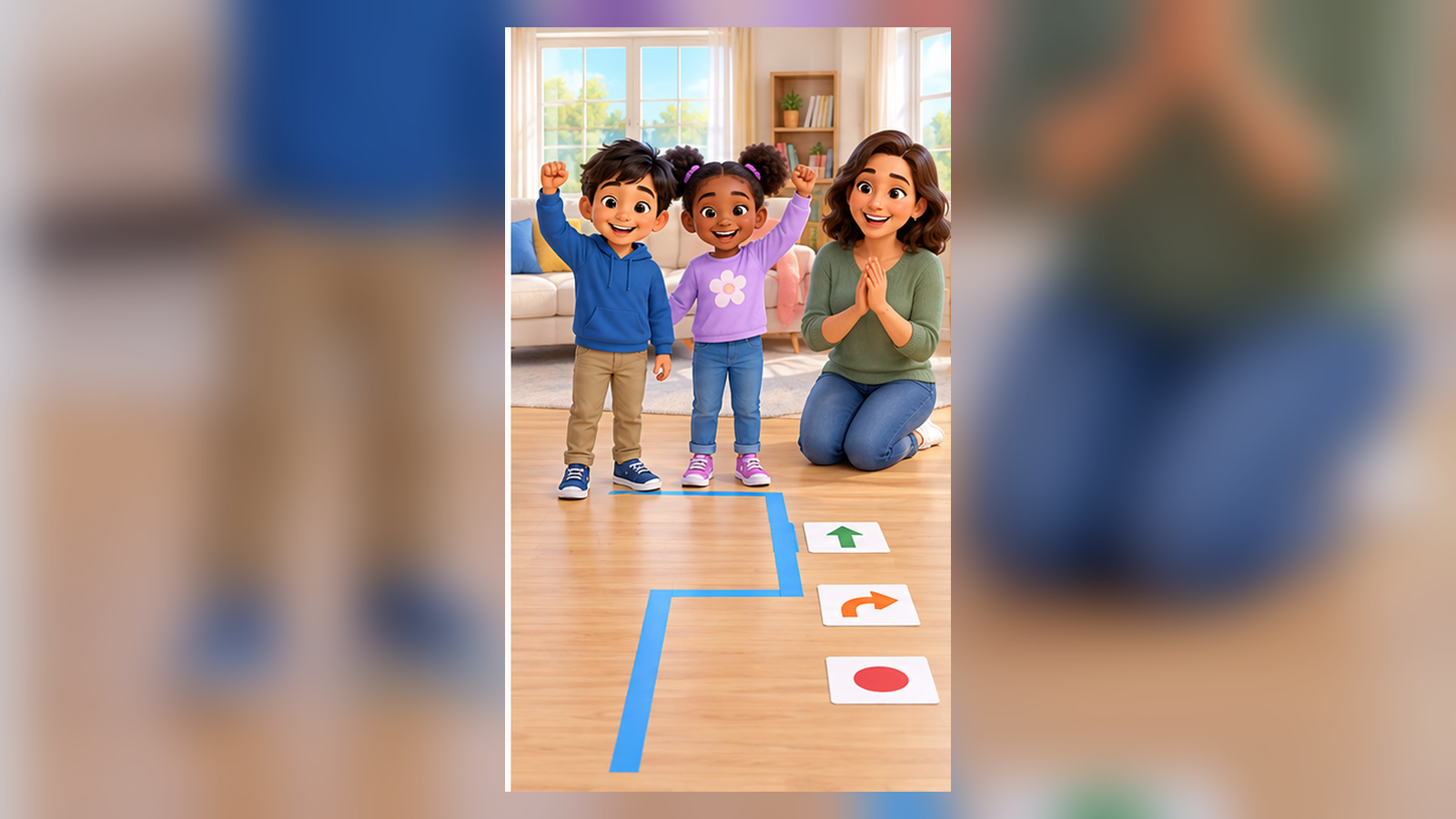
Invite a child to move forward, turn, or pause. Keep the pace comfortable and skip running, racing, or jumping.
Switch who gives the cue
A child can use one simple word or gesture while a partner follows. Adults support respectful turns and enough personal space.
Close and remove safely
Talk about which cue helped most, then have an adult lift the tape slowly and check that the floor is clean and undamaged.
Before you begin: set the activity up for success
An adult first tests low-tack painter’s tape on a hidden section of the floor and checks the manufacturer’s surface guidance. Build one short route on a single level, then walk the entire path to confirm that furniture, rugs, cords, doorways, and slippery spots are clear. Explain that the goal is controlled movement and listening, never speed.
Show rather than over-explain. Demonstrate the first action, use the same key words the child will hear during the activity, and then hand over the turn. Children ages 5-8 often understand more once their bodies and hands are involved. If they hesitate, offer two concrete choices instead of adding a long string of directions.
Helpful words adults can use
Try language that keeps attention on noticing and effort: Show me what you noticed. Which part would you like to try first? What changed that time? Would you like help or another moment? These prompts support the main goal: a simple painter's-tape floor path helps children practice forward, turn, pause, and turn-taking through controlled movement.
Avoid turning the activity into a surprise test. Questions such as Don’t you know this? or Why did you do it that way? can make children defend an answer instead of exploring it. When something does not work, describe what happened in neutral words and invite a new attempt. Adults can model flexibility by changing their own idea, laughing gently at a harmless mistake, and naming what they learned.
What progress can look like
Progress may be quiet. A child might stay with the activity for one more turn, use a clearer word, remember part of the sequence, ask for help, or suggest a variation. Those are useful signs of growing confidence. The emotional path for this activity is eager to focused to cooperative; it does not need to happen in one session.
Notice one specific action instead of offering broad praise. You might say, You looked again before you chose, You slowed your body down, or You told me what you needed. Specific feedback helps children connect their effort with the result. It also gives them language they can use the next time.
Ways to adapt for different children and settings
Shorten the route to one straight line and one turn when several directions feel busy. A child can also trace the path with a finger from a seated position before walking it.
For more challenge, combine two familiar cues or invite the child to design one safe turn with adult help. Keep only one mover on the path at a time and preserve generous personal space.
Common snags and gentle fixes
The child starts to run
Pause the game, model one slow step, and reduce the path to the next visible turn. Restart only when the route is clear.
A cue is confusing
Use one word plus one matching gesture. Let the child repeat or demonstrate the cue before moving.
The tape begins to lift
Stop using that section. An adult removes the loose tape and checks the floor before the game continues.
Questions to use after the activity
- What felt easy, and what needed more time?
- What did you notice that you did not expect?
- Which part would you keep the same next time?
- What would you change if you designed the next round?
- How could you explain this activity to someone else?
Choose one or two questions, not the whole list. The conversation should help the child organize the experience, not turn the ending into an interview. The adult’s practical takeaway is simple: use low-tack tape on a suitable floor, clear the whole route, walk instead of race, and remove tape promptly with adult help.
A quick way to begin
- Prepare only the few materials needed for one short round.
- Show the first action and describe it in one sentence.
- Let the child try, then ask what they noticed.
- Repeat or change one detail based on their response.
KidNation takeaway
Use low-tack tape on a suitable floor, clear the whole route, walk instead of race, and remove tape promptly with adult help.
Find more kid-friendly activity guidance at kidnation.com.