
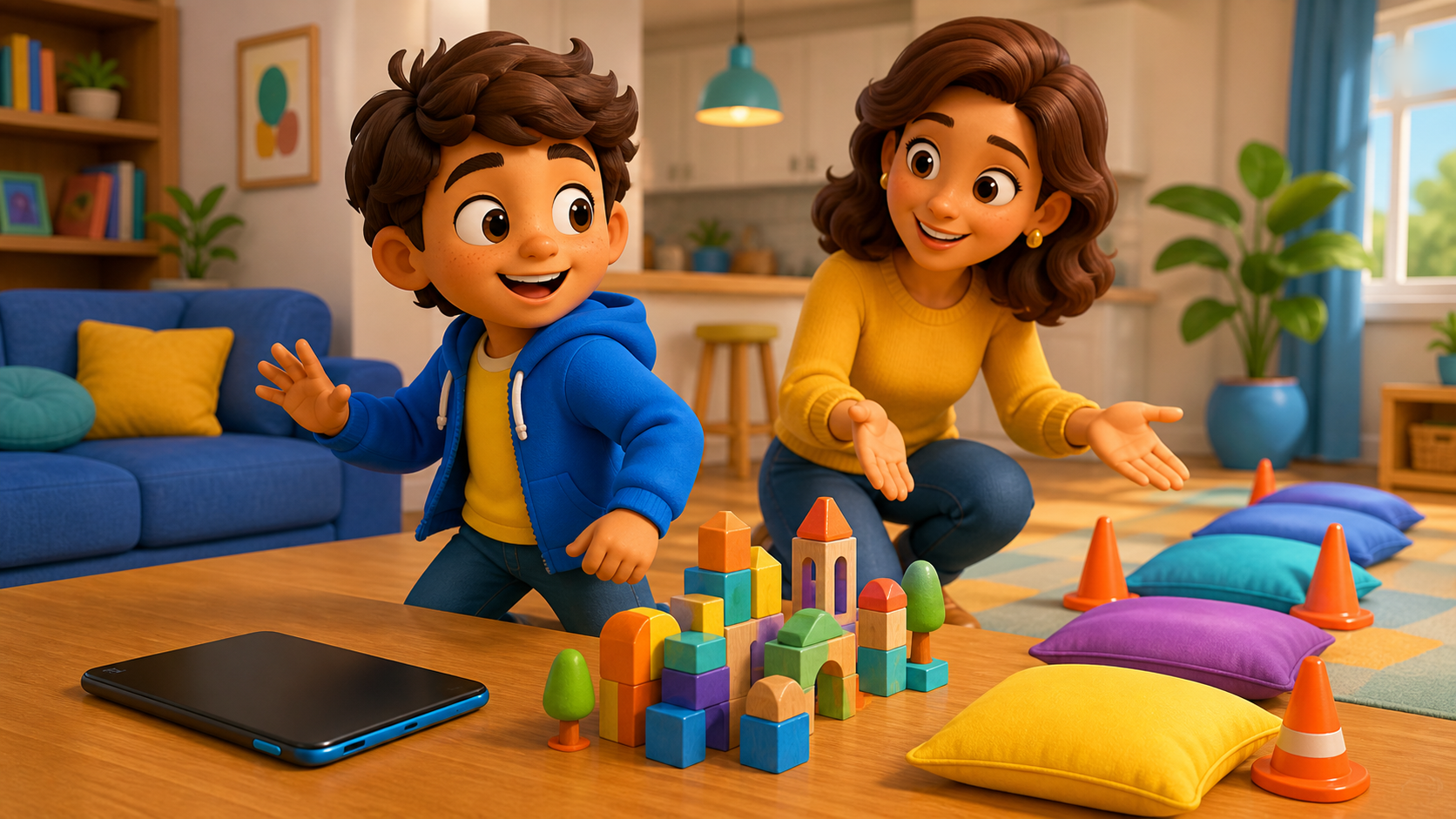
The tablet lands face down on the kitchen table, the episode is over, and your child looks around like the whole room forgot what to do next.
Why the Moment After Screen Time Feels So Big
That small pause after a screen closes can turn wobbly fast. One child asks for another video. Another slides off the chair and starts poking a sibling. Someone else says they are bored before their feet even touch the floor.
It can look like defiance, but a lot of the time it is a transition problem. Kids ages 5-8 are old enough to have favorite shows, favorite games, and very clear opinions. They are still young enough to need help shifting from watching into doing.
A screen gives color, sound, movement, and a clear path. The living room gives a lot of choices and no obvious first step. A good screen-time alternative works like a bridge. It does not need to be amazing. It just needs to be easy enough to start.
The goal is not to make every afternoon quiet. The goal is to make the first five minutes after screen time feel less stuck.
Try a Two-Choice Reset
The simplest place to begin is a two-choice reset. Instead of asking, “What do you want to do now?” offer two clear options that are already possible in the room.
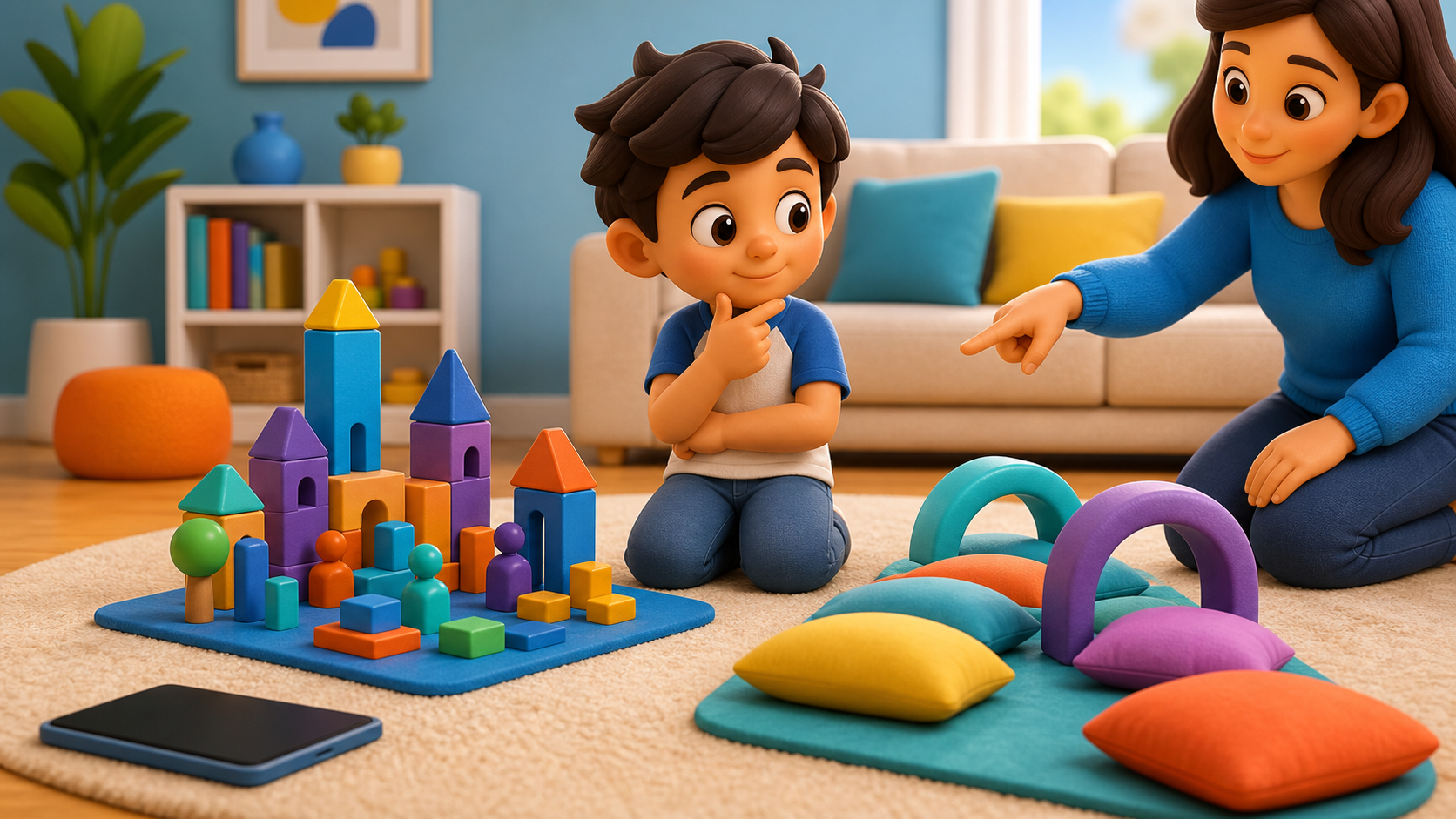
You might say, “Do you want to build a tiny city or make a pillow path?” Another day, try, “Do you want to draw a silly map or act out a short adventure?” The choices should be specific enough that your child can picture them.
This gives kids some control without asking them to plan the whole afternoon. It also keeps the parent out of a long debate. You are not arguing about whether the screen is finished. You are pointing toward what comes next.
If your child says no to both choices, keep the frame small. “These are the two choices for now. You can pick, or I can pick one to start with you.” Some kids need the first minute of help before they can join in. That is normal.
- For movement, offer pillow path or freeze dance.
- For quiet time, offer drawing or toy sorting.
- For connection, offer a story game or a build-together challenge.
Five Alternatives That Are Easy to Start
The best alternatives use familiar materials and give kids a quick win. Keep the first round short. Ten minutes of real play is better than a giant plan nobody wants to finish.
Build a Tiny City
Use blocks, cups, cardboard, paper, toy cars, or whatever is nearby. Ask your child to make three places: a home, a shop, and a silly surprise building. If they need help starting, build the first road.
Make a Pillow Path
Place pillows, cushions, or folded blankets on the floor. Your child can step, jump, crawl, or balance across the path. Add one playful rule, like crossing while holding a stuffed toy.
Draw a Room Map
Give your child paper and ask them to draw the room from above. Then add labels like snack mountain, sock valley, book corner, or dragon chair.
Try a Three-Object Story
Pick three objects from the room. Maybe it is a spoon, a shoe, and a toy car. Your child makes up a short story that includes all three. If they freeze, start with one sentence and let them add the next one.
Sort Something in a New Way
Sorting can calm the body because the task is clear. Try sorting crayons by color, blocks by size, toy animals by where they live, or books by which one looks funniest.
When the First Idea Does Not Work
Some days, the first idea will flop. Your child may be tired, hungry, disappointed, or still thinking about the game they just stopped. That does not mean the routine failed. It means the first step needs to shrink.
Instead of “Build a city,” say, “Can you put down the first road?” Instead of “Draw a map,” say, “Can you draw the couch?” Instead of “Make up a story,” say, “Pick the hero.” Small invitations feel easier than big assignments.
You can also borrow a little energy from what came before. If your child watched something adventurous, invite an adventure. If they watched something funny, ask for a silly drawing. If they watched something calm, offer a quiet choice.
At home, keep a small next-choice basket with paper, crayons, tape, toy figures, cards, and a few building pieces. In a classroom, try a quick hands, feet, voice reset. Students draw one thing they remember, move to a new spot, then share one sentence with a partner.
KidNation can fit naturally when a child is ready for a guided next step. If your child liked the story game, Storyteller lets kids choose a hero, villain, setting, and genre for an illustrated story with read-aloud narration. If your child liked sorting and naming, Word Ninja can support playful vocabulary practice.
FAQ
Do screen-time alternatives have to be screen-free?
Not always. The bigger goal is balance. After a screen, many kids benefit from movement, conversation, drawing, building, or pretend play because those activities use the body and imagination in a different way.
What if my child cries or argues when screen time ends?
Keep the ending steady and the next step small. Use short language, offer two clear choices, and help start the first minute if needed. A child may still feel frustrated, but the routine gives them somewhere to go next.
How long should the alternative activity last?
Start with 5-10 minutes. Short activities are easier to repeat. If your child gets absorbed and keeps going, that is a bonus, not a requirement.
What is the easiest choice for a busy weeknight?
Try drawing, sorting, or a tiny building challenge. Those options need very little setup and can happen near the kitchen, couch, or homework area while the evening keeps moving.