
The night before school, a backpack sits open by the door while one shoe hides under the couch. A short checklist gives kids ages 5-8 a way to help without carrying the whole morning in their heads.
The night before school, it is easy for backpacks, shoes, snacks, forms, and feelings to pile up together. Kids ages 5-8 usually want to help, but they need the steps to be clear and small.
That is where a simple back-to-school checklist can do real work. It turns a busy routine into something children can see, touch, and finish.
Why Checklists Help Small Routines
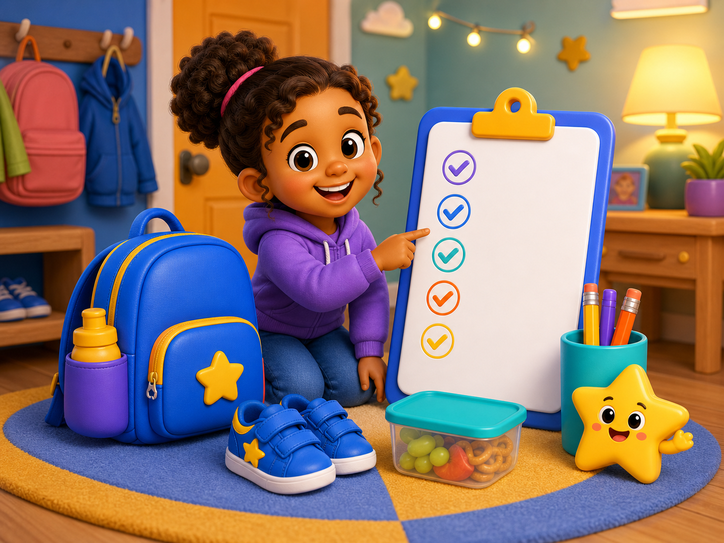
When the backpack is open and everyone is looking for one missing folder, the checklist gives the moment a landing place. It helps kids remember what comes next without needing a grown-up to repeat every instruction.
It also gives them a small win. Checking off “put folder in backpack” or “choose tomorrow’s outfit” can make the school day feel less mysterious.
The Three-Part Backpack Pass
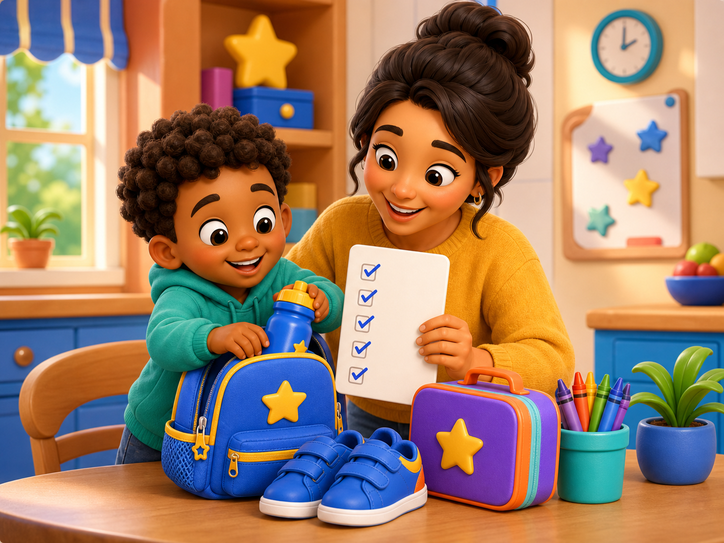
Make a three-part checklist: pack, choose, and calm. Under “pack,” include the backpack, folder, water bottle, or snack. Under “choose,” add clothes or shoes. Under “calm,” add one small bedtime or morning reset, like taking three slow breaths.
Keep the list short enough that your child can finish it in a few minutes. If they cannot read every word yet, add quick drawings or color dots beside each step.
A Morning Basket for the Classroom
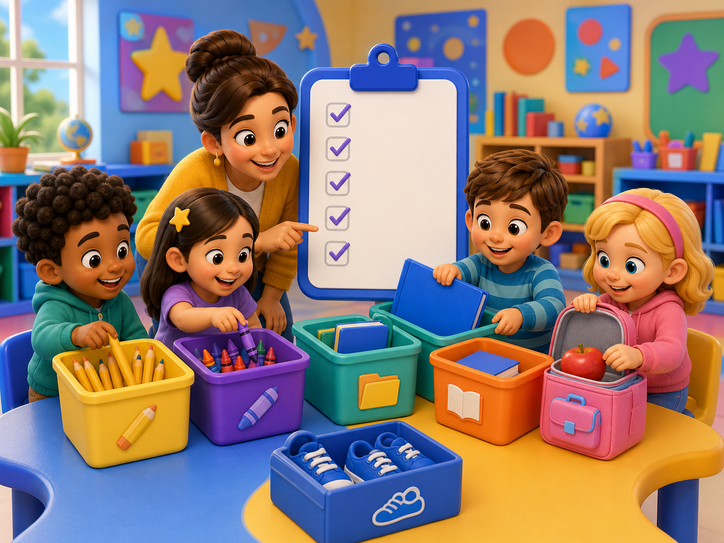
Teachers can turn the idea into a morning routine practice.
- Ask students to name three things that help a school day start smoothly.
- Draw or write those steps on the board.
- Have students act out one step with a partner.
- Invite the class to choose one step they will practice all week.
The goal is not a perfect routine. The goal is helping kids notice that routines are made of small, doable actions.
When the Checklist Falls Apart
When a checklist word is new, Word Ninja can turn it into quick vocabulary practice. Storyteller gives kids a calmer way to imagine the next school-day scene by choosing a hero, villain, setting, and genre for a 10-page illustrated read aloud.
FAQ
How long should a kid checklist be?
For ages 5-8, three to five steps is usually enough. A short list is easier to remember and more satisfying to finish.
What if my child ignores the checklist?
Try doing the first step together for a few days. Once the routine feels familiar, hand over one small responsibility at a time.
Can this work in a classroom?
Yes. Visual checklists are helpful for arrival routines, cleanup, transitions, and end-of-day packing.