
At 9:07, a teacher has five spare minutes and a parent has one tired child at the kitchen table. The best kid-friendly activities work in both places because they are clear, flexible, and easy to start.
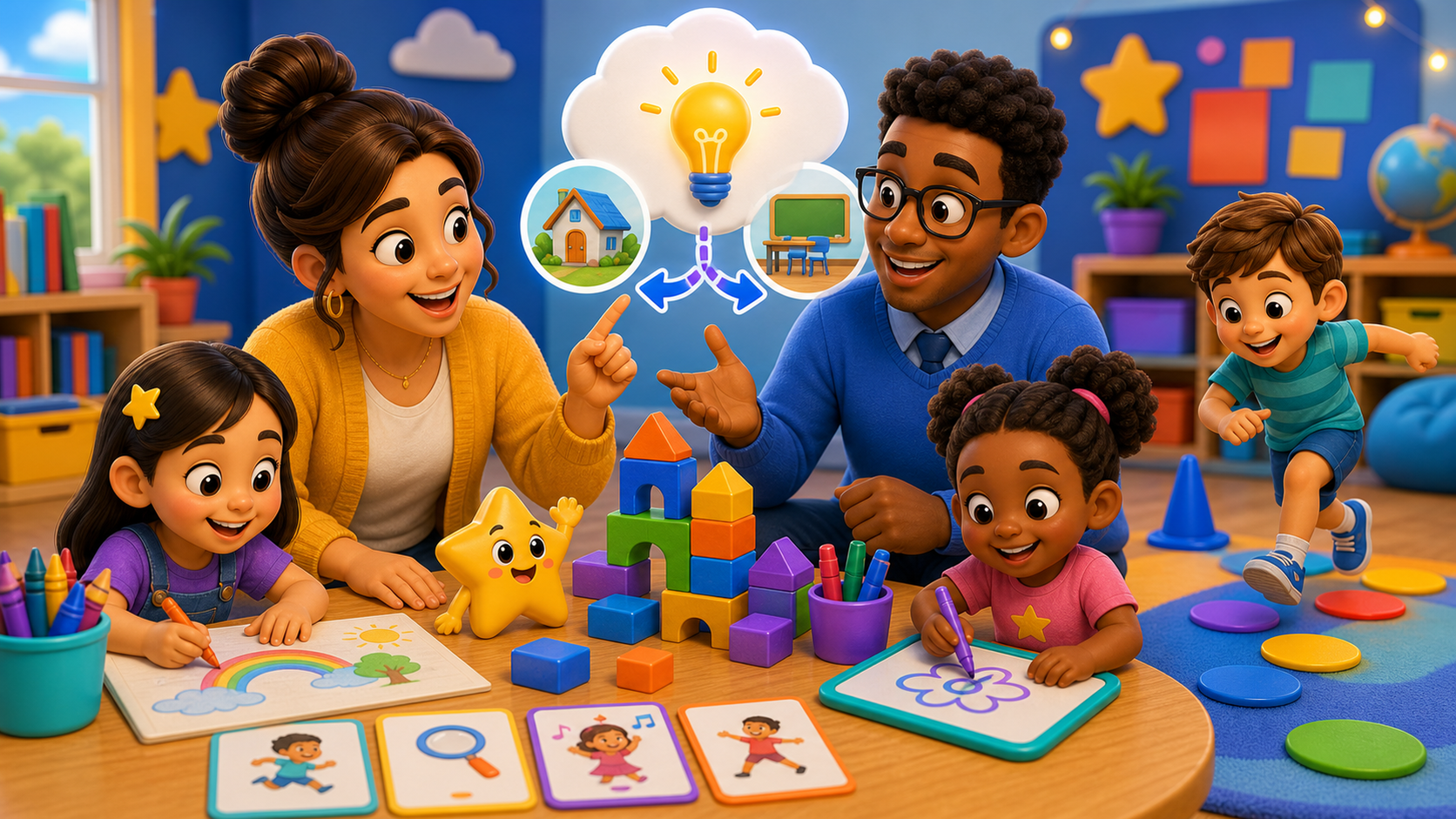
A helpful kid activity should not require a perfect setup. It should work at the kitchen table, during a classroom transition, after school, or in the ten minutes before dinner.
For kids ages 5-8, the strongest activities are clear, active, and flexible. They give children something to do with their hands, words, imagination, or movement.
What Makes an Activity Worth Trying
When there are only ten minutes before dinner or the next classroom transition, a clear activity matters. Kids are learning to read, explain, listen, cooperate, move with control, and manage bigger feelings.
That is why a good activity does more than fill time. It gives kids a small way to practice being curious, capable, and connected.
Choose the Right Five-Minute Window
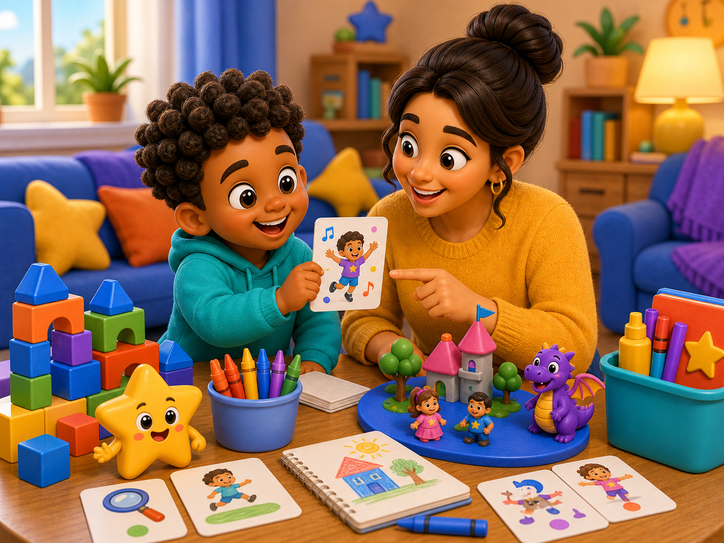
Use the one idea, three choices method. Start with a simple idea like make a tiny adventure, build a calm-down corner, or draw a helpful robot. Then let kids decide whether to draw it, build it, or tell it.
This gives kids freedom without leaving them stuck. It also lets siblings or classmates participate at different skill levels.
One Routine That Works in Two Settings
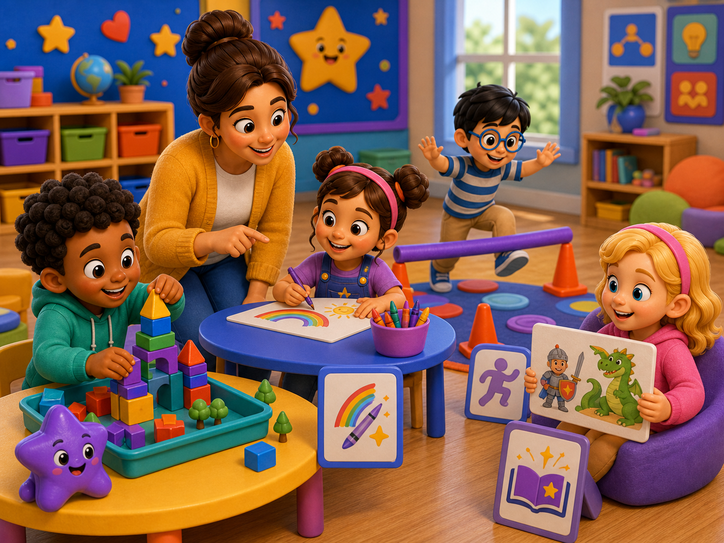
Teachers can use the same structure for a quick center or transition activity.
- Write one idea on the board.
- Let students choose whether to draw, write, or act.
- Give students five focused minutes.
- Invite a few students to share what they made or noticed.
The routine is simple enough to repeat with new ideas throughout the week.
When the Activity Meets Real Life
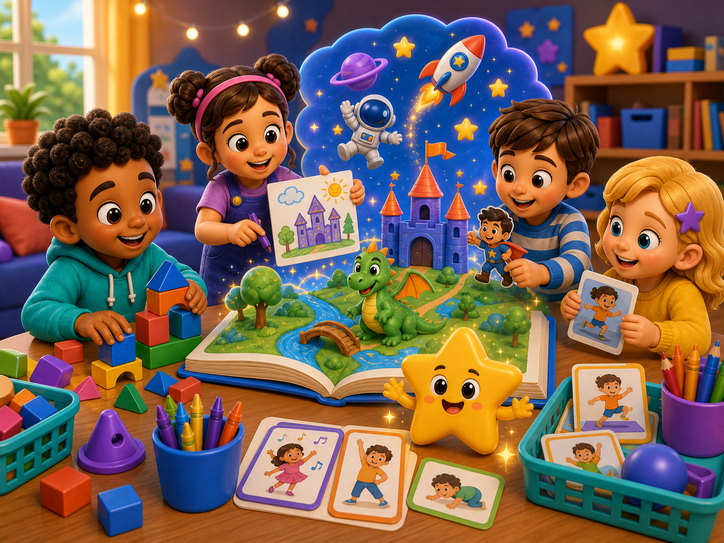
For a quick extension, Word Ninja gives kids a playful place to repeat the activity key words. Storyteller can turn the same idea into a 10-page illustrated read aloud after kids choose a hero, villain, setting, and genre.
When the Room Is Not Ready
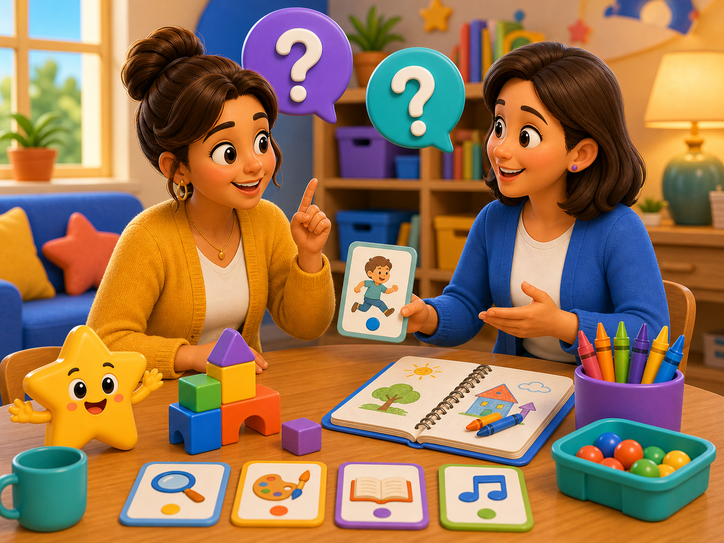
If the group is tired, noisy, or stuck, shrink the activity to one choice. A quick drawing, one spoken idea, or a single movement can still give the moment a useful shape.
FAQ
What makes an activity age-appropriate for kids ages 5-8?
It should have simple directions, room for imagination, and a clear finish. Kids should be able to participate without needing constant grown-up correction.
How much prep should parents expect?
The best everyday activities use materials already nearby. Paper, crayons, blocks, household objects, movement, and conversation are usually enough.
Can one activity work for both home and school?
Yes. Choose flexible ideas that kids can answer by drawing, building, speaking, moving, or writing.