
Two kids reach for the same marker at the art table, and the room gets quiet for half a second. Children ages 5-8 need words and practice they can actually use in that exact moment.

For kids ages 5-8, “be nice” is often too vague. They need small phrases, clear choices, and a chance to practice before feelings get too big.
Helping kids get along is less about one perfect lesson and more about repeating useful social moves. They practice asking, waiting, trading, listening, and repairing.
Why Sharing Needs Actual Words
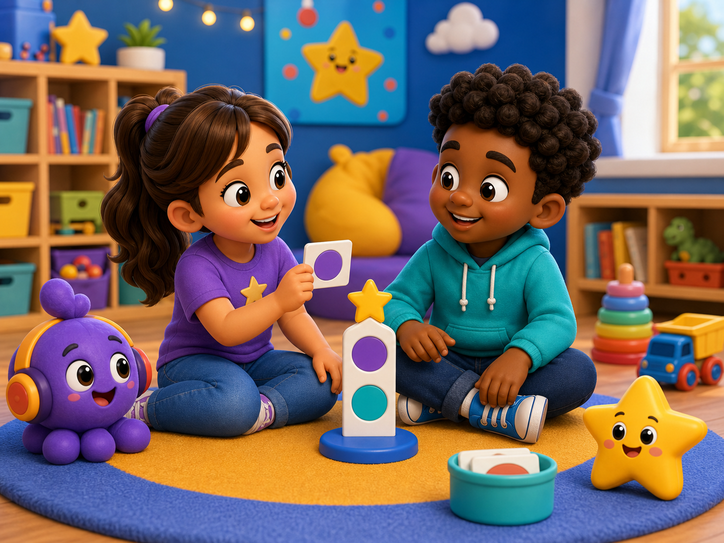
When two kids reach for the same marker, the right words need to be close by. They may know what kindness means, but still need practice using it when they feel frustrated.
Short scripts help. A child who can say “Can I have a turn when you are done?” has a better tool than grabbing or giving up.
Practice One Repair Phrase at Home
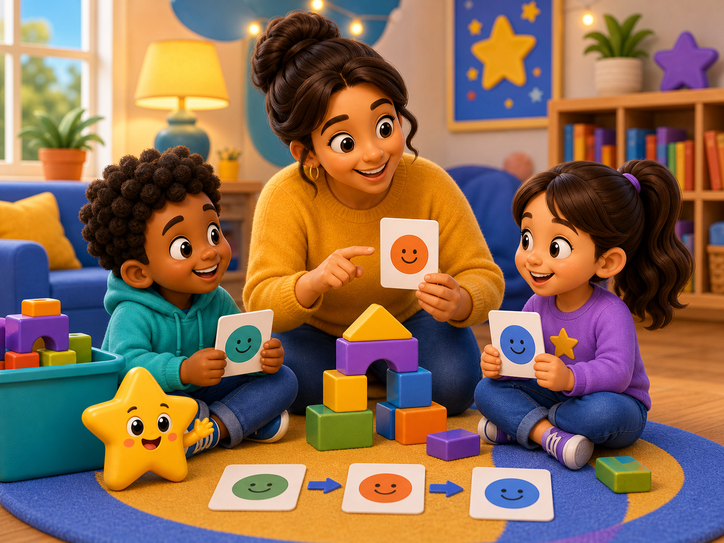
Practice three “getting along” phrases during a calm moment.
- “Can I have a turn next?”
- “I do not like that. Please stop.”
- “Can we make a plan?”
Act them out with toys, blocks, or stuffed animals. Keep it light so it feels like play, not a lecture.
Role-Play the Marker Moment in Class
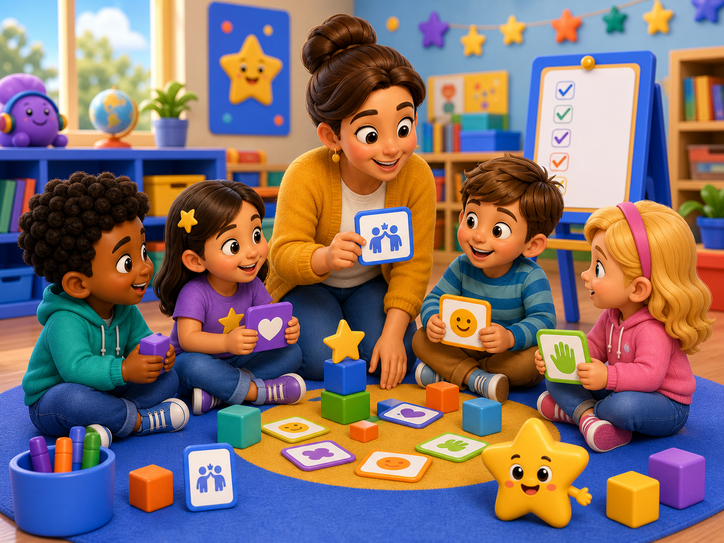
Try a quick partner role-play.
- Give pairs a simple problem, like two students wanting the same marker.
- Ask them to try one helpful phrase.
- Have them switch roles.
- Invite the class to name which words helped the problem get smaller.
The point is not to avoid every disagreement. The point is giving kids words they can reach for when disagreements happen.
When Nobody Wants to Apologize Yet

Word Ninja can help kids practice the words they need for sharing, waiting, and repair. Storyteller can turn a small social problem into a 10-page illustrated read aloud where kids choose the hero, villain, setting, and genre.
FAQ
What if kids still argue?
That is normal. The goal is progress: shorter conflicts, clearer words, and more chances to repair.
Should grown-ups solve every disagreement?
Not every time. When it is safe, guide kids toward words and choices they can try themselves.
How can teachers use this with a whole class?
Practice one phrase at a time and use it consistently during transitions, group work, and play.